
Last updated November 5, 2026
 Wrought iron
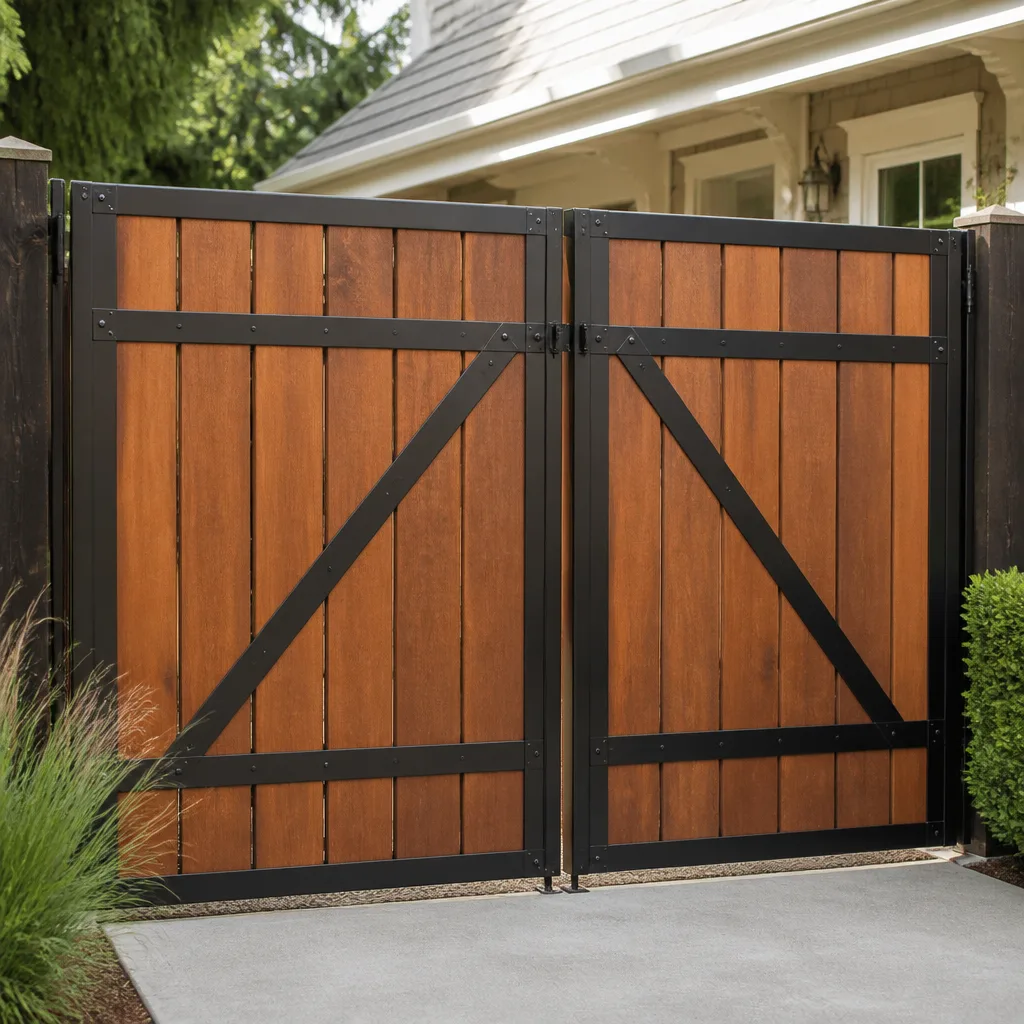 Wood & steel frame
 Farm & ranch
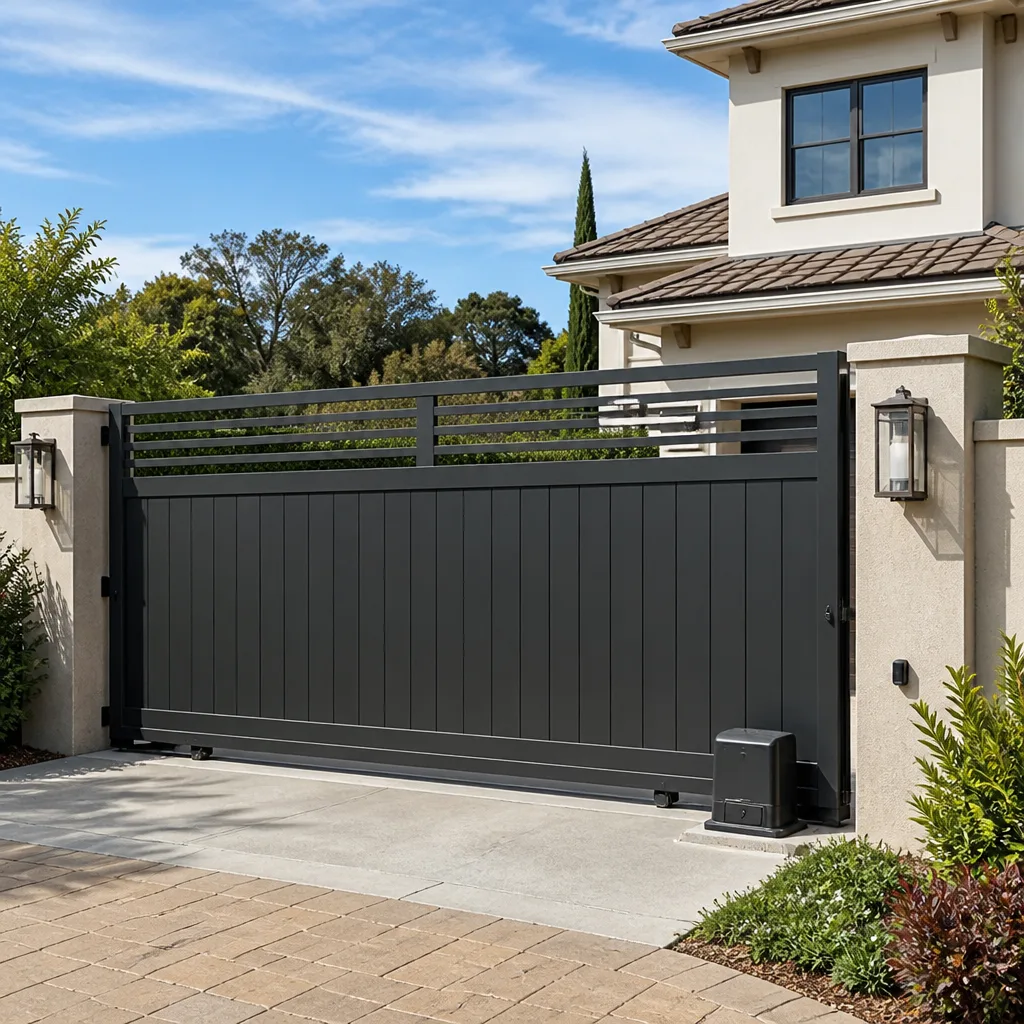 Sliding driveway gates
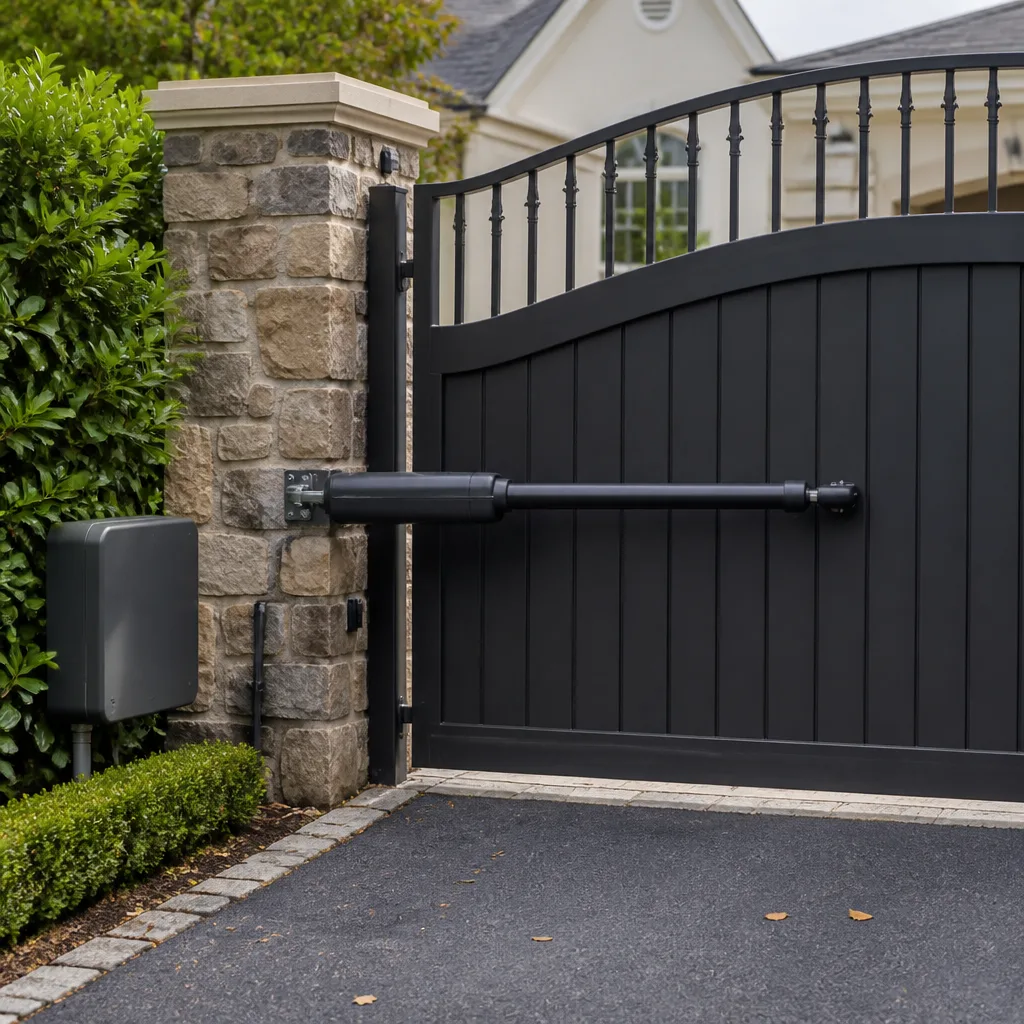 LiftMaster operators
Free on-site gate assessment - hinges, posts, and your LiftMaster or Nice gate operator checked before anything is quoted
The assessment is free and the quote is the invoice.
Get your free estimateGate Repair Troubleshooting in Redlands: Common Problems and How to Fix Them
Most homeowners in Redlands call a gate technician convinced their operator motor is dead, when the actual culprit is something far simpler: a tripped GFI outlet, a sun-bleached remote, or a safety sensor nudged out of alignment by a trash bin. We’ve watched this play out hundreds of times across Redlands’ historic neighborhoods and newer foothill developments. The gate is not failing. It’s confused. And confusion, unlike a burned-out motor, often costs nothing to fix. This guide walks you through a systematic elimination process that sorts every gate failure into one of four root causes. Work through them in order, and you’ll either have your gate running again tonight or know exactly what to tell the technician when you call.
Styles & brands we work with
- Wrought iron
- Wood & steel frame
- Farm & ranch
- Sliding driveway gates
- LiftMaster operators
Quick Answer
Gate repair troubleshooting in Redlands comes down to four categories in strict order: power, signal, mechanical wear, and misalignment. Start by checking the breaker, GFI outlet, and any power switch to the operator. Then test remotes and keypads for fresh batteries and clear line-of-sight. If power and signal are fine, look at hinges, rollers, and the track for visible damage. Finally, check whether the gate posts have shifted or the limit switches need adjustment after Redlands’ summer heat cycles. Anything involving the operator’s internal wiring or heavy gate panels warrants a call to a gate repair specialist.
Table of Contents
- The Four-Category Framework: Power, Signal, Mechanical, Alignment
- Power Issues: The Invisible Failure Point
- Signal Problems: When the Gate Ignores the Command
- Mechanical Wear: Hinges, Rollers, and Tracks
- Misalignment: Heat Cycles and Shifting Posts in Redlands
- Testing the Motor vs. the Control Board Without Voiding Your Warranty
- Emergency Symptoms vs. Symptoms That Can Wait
- Common Mistakes to Avoid
- When to Call a Professional
- Frequently Asked Questions
- The Bottom Line
The Four-Category Framework: Power, Signal, Mechanical, Alignment
Every gate failure we’ve diagnosed in Redlands fits into one of four buckets. The trick is knowing which bucket to open first, because testing them out of order wastes time and money. Here’s the sequence that works consistently.
- Power – Is the operator receiving electricity? This includes breakers, GFI outlets, disconnect switches, and the internal power supply.
- Signal – Is the operator receiving a command from a remote, keypad, or safety device? This includes batteries, antenna issues, and sensor misreads.
- Mechanical – Is something physically broken, worn, or binding? Hinges, rollers, track sections, and hinges on swing gates all fall here.
- Alignment – Has the gate’s geometry shifted so that even a healthy operator and solid hardware cannot move it smoothly? Posts lean, gates sag, and limit switches lose their reference points.
Here’s why the order matters: a gate with no power will not respond to a remote, no matter how fresh the batteries are. A gate with a dead keypad will not open even with perfect voltage at the operator. And a gate whose posts have shifted in Redlands’ clay-heavy soil will strain a perfectly good motor until its thermal overload trips. Work the sequence. It saves you from replacing parts that were never the problem.
In our experience serving Redlands properties from the South Side to Sunset Drive, the first two categories account for more than half of all service calls. You can often resolve those yourself in under five minutes. The second two categories are where a specialist earns their keep.
Power Issues: The Invisible Failure Point
Before you call anyone, check this: a large share of “broken gate” service calls in Redlands turn out to be a tripped GFI outlet or an operator that was accidentally switched off. Electric gate operators plug into or are hardwired to a dedicated circuit, and that circuit usually includes a GFI outlet somewhere along the garage wall or an exterior box near the gate. GFI outlets trip for reasons that have nothing to do with the gate: a nearby sprinkler head hitting the outlet box, a power surge during a summer thunderstorm, or a ground fault from a tired extension cord sharing the circuit.
- Locate the GFI outlet closest to the gate operator. In most Redlands homes, it’s on the garage wall nearest the driveway gate or in a weatherproof box mounted on the fence line.
- Press the RESET button firmly. You should feel a click. If the outlet immediately trips again, there’s a genuine electrical fault downstream, and you should not keep resetting it.
- Check the breaker panel. A breaker that’s halfway between ON and OFF often looks fine at a glance. Push it fully to OFF, then back to ON.
- Look for a disconnect switch on or near the operator itself. Some operators have a small toggle or pull-out disconnect. Make sure it’s in the ON position.
- If the operator hums but the gate does not move, power is present but the motor is locked out or the capacitor has failed. That’s a service call, not a DIY fix.
One Redlands-specific note: our dry inland summers cause soil to contract around buried conduit and pull on connection boxes. If your gate loses power intermittently after months of dry heat, a loose wire connection may be opening and closing with the soil’s movement. Intermittent behavior of that sort rarely resolves itself and tends to worsen. A technician can trace the circuit and find the loose junction in one visit.
Never work inside the operator housing with the power on. The internal capacitors store a charge even after the breaker is off. If the diagnosis points inside the operator, that’s the moment to step back and call a professional.
Signal Problems: When the Gate Ignores the Command
If the operator has power and the manual release moves the gate freely, the next suspect is signal. Something has to tell the operator to run. That something is usually a remote, a keypad, a vehicle loop detector, or a safety sensor. Each one can fail independently, and each failure looks similar from the driver’s seat: the gate just sits there.
Remotes are the most common culprit. A dead battery is obvious but often overlooked. A remote that was dropped on concrete can crack its internal circuit board while still lighting up. A remote left on a car dashboard through a Redlands summer can suffer heat damage to its solder joints. And remotes from different manufacturers occasionally lose their programming after a power outage, especially if the operator had a weak memory battery.
Keypads bring their own failure modes. Sun exposure fades the membrane buttons until they stop registering presses. Spider webs and dust inside the housing can bridge contacts and cause phantom entries. And many keypads have a small coin-cell battery inside that homeowners never know exists. That battery powers the keypad independently of the operator, so the gate can be perfectly healthy while the keypad appears dead.
If you have a vehicle loop detector buried in the driveway, start by checking whether the gate still opens from the inside or with a manual press. If the remote works but the loop does not, the loop may be damaged, and that’s typically a technician job. Loop detectors are sensitive to ground shifts, and Redlands’ expansive clay soils put real stress on the loop wire over time.
A methodical signal test looks like this:
- Replace the remote battery with a fresh one, even if the indicator light still glows.
- Stand within 30 feet of the operator with a clear line of sight and press the remote. Obstructed antennas are a common issue when a gate is set back from the road.
- Test the keypad with the code. If the keypad beeps but the gate does not move, the keypad’s signal is reaching the board but the board is not acting on it.
- Check the safety sensors at the base of the gate. If a leaf, spider web, or a shifted mounting bracket has broken the sensor’s beam, most operators will refuse to close and some refuse to open. Many sensors have a small alignment light. If it’s off or blinking, clean and realign the sensor.
One thing we tell every Redlands homeowner with an electric gate repair concern: a gate that opens but refuses to close is almost always a sensor issue, not a board issue. The system is doing exactly what it was designed to do. It believes something is in the path.
Mechanical Wear: Hinges, Rollers, and Tracks
Gates are big, heavy objects that move thousands of times a year in heat, wind, and dust. Mechanical wear is inevitable. The question is whether the wear is cosmetic or structural, and the difference is visible if you know where to look.
Swing gates live and die by their hinges. A hinge that’s beginning to fail will show a slight sag on the latch side of the gate before it fails outright. Look for the gate’s top edge running visibly out of level. Push the gate gently at the latch side. If it flexes more than a fraction of an inch, the hinge pins or the hinge mounting bolts are wearing. A gate that sags badly enough to drag on the ground is wearing out its own hardware faster every day it runs.
Slide gates depend on rollers and a track. Rollers should sit square on the track and spin freely. Look for flat spots on the roller wheels, which indicate the gate has been dragging rather than rolling. Listen for a grinding sound as the gate moves. That’s the sound of metal on metal, and it’s telling you the rollers need cleaning or replacement before they damage the track itself. In Redlands, dust and leaf debris from eucalyptus trees along older properties accumulates in track channels and acts as an abrasive, accelerating roller wear.
Cantilever and v-track gates have different geometries, but the same principle applies: rolling surfaces wear, and worn rollers destroy what they roll on. A track replacement is far more expensive than a roller replacement. Checking your rollers twice a year is free.
Welds are another wear point on steel gates. Look for hairline cracks at the joints where vertical pickets meet horizontal rails, especially near the hinge side and the leading edge. A crack that’s an inch long today will be three inches after another season of vibration. Catching it early means a simple weld repair instead of a full panel rebuild.
Cast iron and ornamental aluminum gates have their own failure modes. Cast iron cracks rather than bends. Aluminum corrodes at dissimilar-metal contact points, like where steel bolts pass through aluminum frames. A chalky white residue at those joints is a sign of galvanic corrosion eating the connection from the inside.
Misalignment: Heat Cycles and Shifting Posts in Redlands
Redlands sits on clay-rich soil that expands when wet and contracts when dry. Our winters bring modest rain, and our summers bring long dry stretches. The result is soil that moves seasonally, and anything anchored in it moves too. Gate posts are anchored in it. Over enough seasons, a post that started perfectly vertical will drift, and the gate’s entire geometry goes with it.
A post that has shifted a quarter-inch changes the arc of a swing gate. The latch no longer lines up with the strike plate. The hinges bind. The operator has to push harder, drawing more current and running hotter. Its limit switches, which measure the gate’s travel, may now stop the gate short of full open or slam it against the stop at the closed position.
A shifted post on a slide gate is simpler to spot: the track is no longer level, so the gate rolls sluggishly or stalls midway. You can check this with a four-foot level laid across the track at several points. But correcting it is not a homeowner job. A post that has shifted enough to affect gate travel may need to be re-set in the footing, and that work involves the gate’s weight, the operator’s mounting, and the track’s alignment all at once.
There’s a seasonal rhythm to alignment complaints in Redlands. It accelerates late in the summer dry season, as the soil contracts and posts lean into the void. Then it stabilizes after the winter rains, when the clay swells back around the footings. If your gate sticks or creaks every August and works fine by January, you are seeing soil movement, not a failing motor. The fix is a post adjustment, not a motor replacement.
Limit switches deserve their own mention because they’re the operator’s memory of where the gate should stop. On operators from brands like LiftMaster, FAAC, BFT, and Linear, limit settings are often adjustable through a small dial or a set screw. But before you touch them, understand this: changing a limit setting to compensate for a shifted post is treating the symptom, not the cause. We’ve seen limit adjustments pushed so far that the operator runs the gate past its designed stop and bends a hinge. If the gate’s position has changed, find out what moved before adjusting the operator’s memory of where the gate should be.
Testing the Motor vs. the Control Board Without Voiding Your Warranty
When an electric gate operator misbehaves, the owner’s first instinct is often to replace the motor. Before you go down that road, understand how the system is actually structured. The motor is the muscle. The control board is the brain. The brain decides when the muscle moves, how far, and for how long. Most operator failures that look like a dead motor are actually a control board issue. And most warranty claims are denied because the owner opened the housing and started probing things without knowing what they were touching.
Here’s a safe testing sequence that will not void your warranty. It focuses on external observation, which is always allowed.
- Watch the operator’s indicator lights. Most operators from LiftMaster, FAAC, BFT, and Linear have diagnostic LEDs on the control board that flash in patterns. A flashing sequence is a code, and the code is documented in your owner’s manual. The blink pattern tells you whether the board sees a sensor fault, a limit fault, or a thermal overload. Reading the flash code is not a warranty violation.
- Listen for the relay click. When you press the remote, the control board should click as its relay closes to send power to the motor. If you hear the click but the motor does not respond, the motor or the motor’s capacitor is suspect. If you hear nothing at all, the board is likely not receiving or processing the command.
- Smell the motor housing. A motor that has burned out smells like overheated insulation. It’s a sharp, acrid scent that lingers. A motor that has simply stopped responding to commands has no odor at all.
- Feel the motor’s temperature after a cycling attempt. A motor that tries to run but is stalled will be hot to the touch after a few minutes. A motor that never energizes stays cool. A hot motor suggests a mechanical bind or a failed capacitor, not necessarily a dead motor.
- Use the manual release. Every electric operator has a manual release mechanism that disconnects the motor from the gate. Pull it and try moving the gate by hand. If the gate moves smoothly with the release engaged, the mechanical components are fine, and the problem is electrical. If the gate does not move smoothly by hand, no motor on earth will move it either, and the problem is mechanical.
That last test alone answers the motor question more cleanly than any amount of parts-swapping. We work on the brand you already have, and that brand-agnostic approach means we diagnose the system as it sits, not as a sales opportunity for a full replacement. Electric gate diagnosis starts with understanding the system, not swapping parts. If the manual test points to an electrical fault, a technician can pinpoint the board or the motor in one visit and give you a written price before any work starts.
Never probe inside the operator with a multimeter unless you have been trained to do so. The control board carries live voltage even with the breaker off in some configurations, and the motor capacitor can discharge violently. This is a genuinely dangerous component of the trade, and the safe place for a homeowner to stop is at the manual release and the indicator lights.
Emergency Symptoms vs. Symptoms That Can Wait
Not every gate problem is an emergency. Some can wait for regular business hours without consequence. Others need attention the same day, because a gate that’s stuck open is a security gap and a gate that’s stuck closed is a fire access problem.
Call immediately if:
- The gate is stuck in the open position and you are on a busy street or have small children. An open gate on a Redlands property that normally stays closed is an invitation to foot traffic.
- The gate is stuck closed and blocks vehicle access to the home. In a fire or medical emergency, that delay matters.
- Sparks or smoke are visible anywhere around the operator or the gate’s wiring. Kill the breaker and call right away.
- The gate slams shut rather than closing under control. That indicates a failed operator brake or a snapped mechanical component.
- The gate begins moving on its own without any command. This is rare but serious, and usually points to a failed control board or a short in the wiring.
Can wait until regular business hours:
- The gate opens and closes but does so slowly or noisily. This is wear, not failure, and it will not strand you tonight.
- The remote range has shrunk but still works from close range.
- The gate’s finish is deteriorating or the rollers show visible wear but the gate still moves smoothly.
- The keypad works intermittently. Try a fresh battery first, then schedule a visit if it persists.
Use your judgment on the middle cases. A gate that works but makes a grinding sound every cycle is wearing itself out in real time. The longer it runs that way, the more expensive the repair becomes. A gate that works perfectly but looks rough can wait indefinitely.
Common Mistakes to Avoid
- Resetting a tripped GFI over and over. If the outlet trips again immediately after you reset it, there’s a real fault downstream. Repeated resets can damage the GFI and energize a compromised circuit. One reset, then a phone call.
- Spraying lubricant into the operator housing. Gate operators are not lawn equipment. Grease and spray lubricants inside the housing attract dust and conduct heat in exactly the wrong places. Lubricate hinges and rollers on the gate itself, never the operator internals.
- Adjusting limit switches to compensate for a sagging gate. The sag is the problem. The limit settings are reacting to it. Fix the post or the hinge first, then reset the limits to match the corrected geometry. Cheating the limits only shifts the stress elsewhere.
- Replacing the remote before testing the operator. If the operator’s antenna is damaged or the control board is not receiving, a new remote will not help. Test the keypad and the manual release before buying parts.
- Welding a gate panel while the operator is connected. Welding current can travel through the gate frame and into the operator’s electronics, destroying the control board. Disconnect the operator fully before any welding or grinding work.
- Ignoring a gate that’s getting slower. Slow operation means increased current draw, which means heat, which means a thermal overload eventually. The operator is telling you something is wearing out. Listen to it before it strands the gate in the open position.
- Propping a heavy gate open with a rock or a block. Swing gates are not designed to hang in a partially open position for long periods. The constant side load bends hinges and shifts posts, which is exactly the kind of alignment problem that’s expensive to correct.
When to Call a Professional
Some gate repairs are simple enough for a careful homeowner, but any of the following scenarios is a clear signal to stop and call a specialist: the operator is hot to the touch, the control board shows a fault code you cannot identify, the gate has shifted on its posts, a weld has cracked, or the problem is intermittent and defies your testing. Intermittent faults are the most frustrating because they waste weekends and never get better on their own. If you have worked through power, signal, mechanical, and alignment checks and the gate still misbehaves, the next step is a trained eye. Gate Repair Redlands offers free estimates in Redlands, and we can typically have a technician at your property fast dispatch from 7am to 7pm. From the motor to the hinge, we look at the entire system before recommending anything. Call (844) 405-5765. We answer 24/7.
Frequently Asked Questions
Gate repair costs in Redlands vary by the failure point, but most common fixes, like a replacement control board or a hinge repair, fall into a predictable range once we see the gate in person. The written estimate sets the final price before any work starts, and we never surprise you with an invoice that exceeds it. Call (844) 405-5765 for an exact quote. Estimates are free, and we answer 24/7 with fast dispatch from 7am to 7pm.
Yes, in most cases we can dispatch a technician the same day you call, Sunday through Friday, from 7am to 7pm. We carry common parts for LiftMaster, FAAC, BFT, and Linear operators, which means many electric gate repairs are completed in a single visit. Call (844) 405-5765 and tell us what the gate is doing. We answer 24/7 and will book you into the next available opening.
That symptom almost always points to a safety sensor issue. The operator believes something is in the gate’s path and is refusing to close by design. Check for leaves, spider webs, or a shifted sensor bracket at the base of the gate, then clean and realign the sensor. If the problem persists after that, the sensor or its wiring needs attention. Call (844) 405-5765 for a specific diagnosis.
Yes. We work on the brand you already have, including LiftMaster, FAAC, BFT, Linear, Viking, Ghost Controls, DoorKing, Elite, and Mighty Mule. We do not push replacements to sell a preferred brand. Our technicians assess what the system actually needs, not what generates the largest ticket.
Look for a gate that’s dragging on the ground, a latch that no longer lines up with its strike plate, or a track that’s visibly out of level. In Redlands, clay soil expands and contracts with seasonal moisture, which nudges posts out of plumb over time. If your gate sticks worse at the end of a dry summer than it does after winter rains, post movement is the likely cause.
It depends on where it has failed. A failed control board is often worth replacing on an otherwise healthy operator, especially if the mechanical components and gate structure are solid. A board replacement is usually faster and less expensive than a full operator swap. If the motor is burned out and the gate itself is worn, replacement starts to make better sense. We’ll give you a straight comparison on both options before any work begins. Call (844) 405-5765 for a free estimate.
The Bottom Line
Most gate problems in Redlands are not mysteries. They are power problems, signal problems, mechanical wear, or misalignment. Work through those categories in order, and you’ll solve a surprising number of issues yourself without touching a tool. When the problem is beyond the basics, a specialist who understands the full system, from the motor to the hinge, will resolve it faster and more accurately than a generalist who sees a gate twice a year. Back to secure in one visit is the goal, and it starts with a diagnostic approach that respects the system as it sits. If you’ve reached the end of your troubleshooting and the gate is still misbehaving, call (844) 405-5765. We answer 24/7. Fast dispatch from 7am to 7pm, Sunday through Friday. The estimate is free, the price is set in writing before work starts, and we work on the brand you already have.
Written by the team at Gate Repair Redlands, serving Redlands since 2018.
See the difference
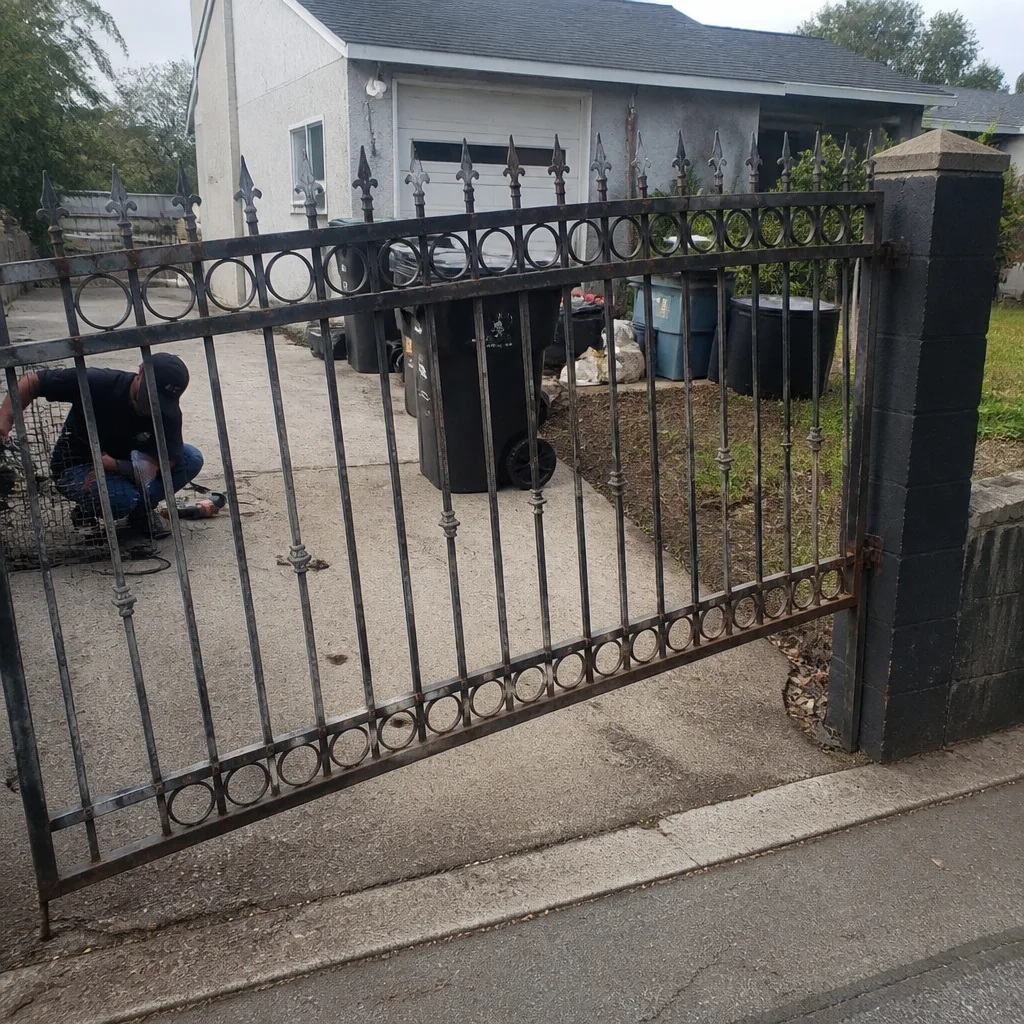 Before
 After
 Before
 After
 Before
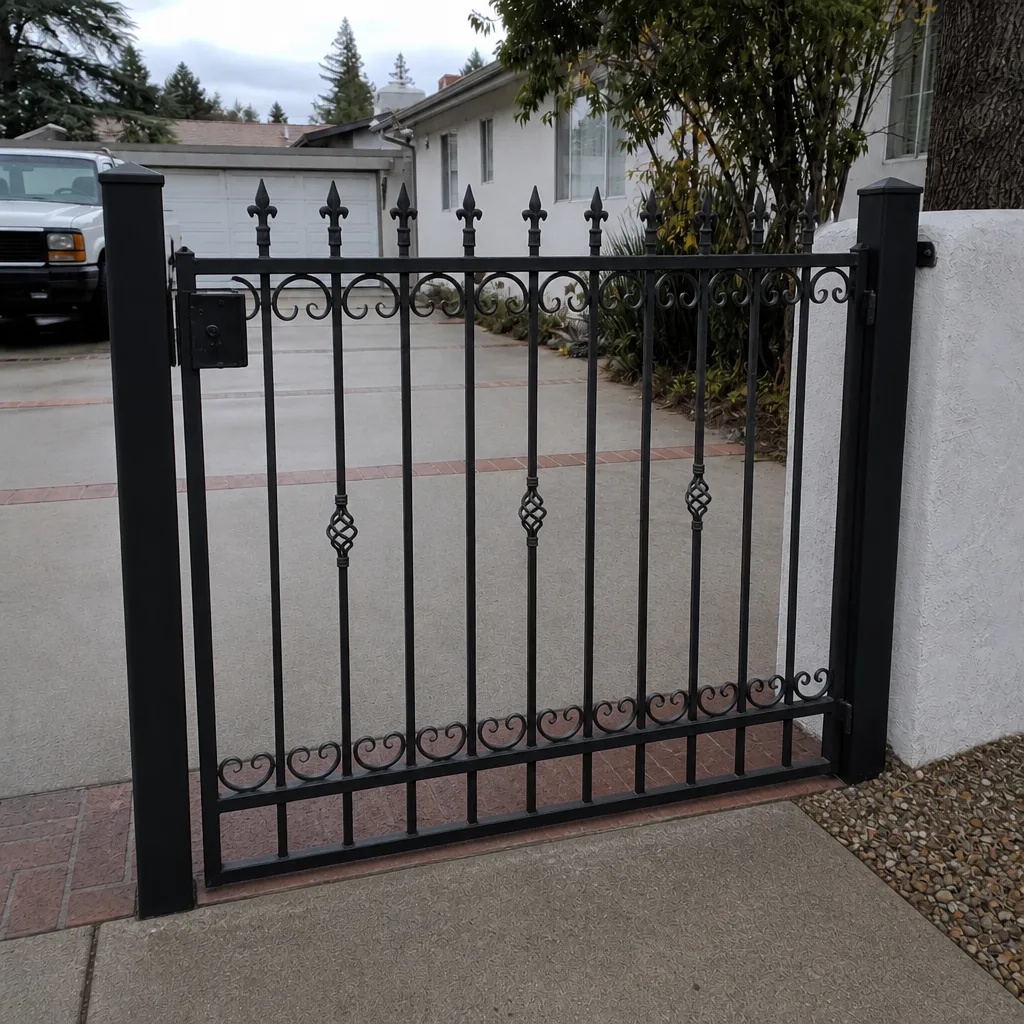 After