
Last updated November 5, 2026
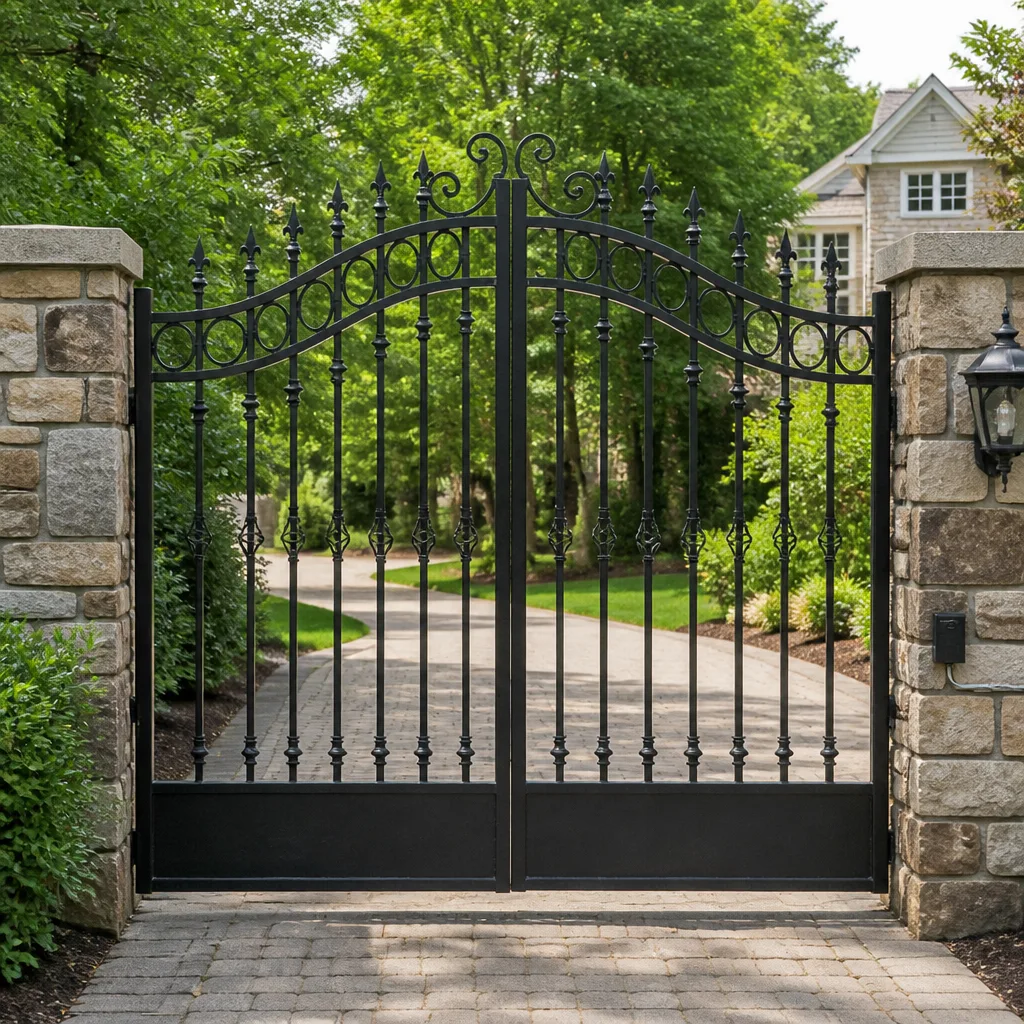 Wrought iron
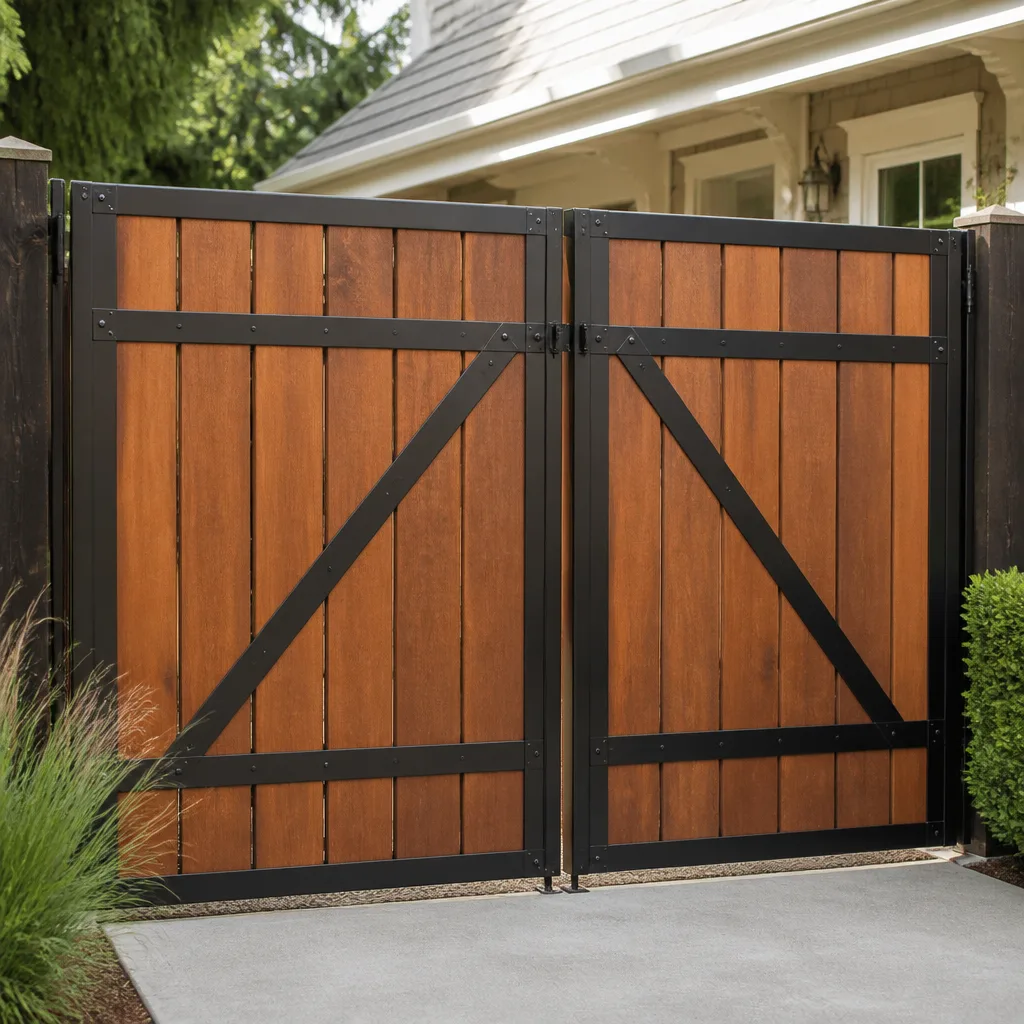 Wood & steel frame
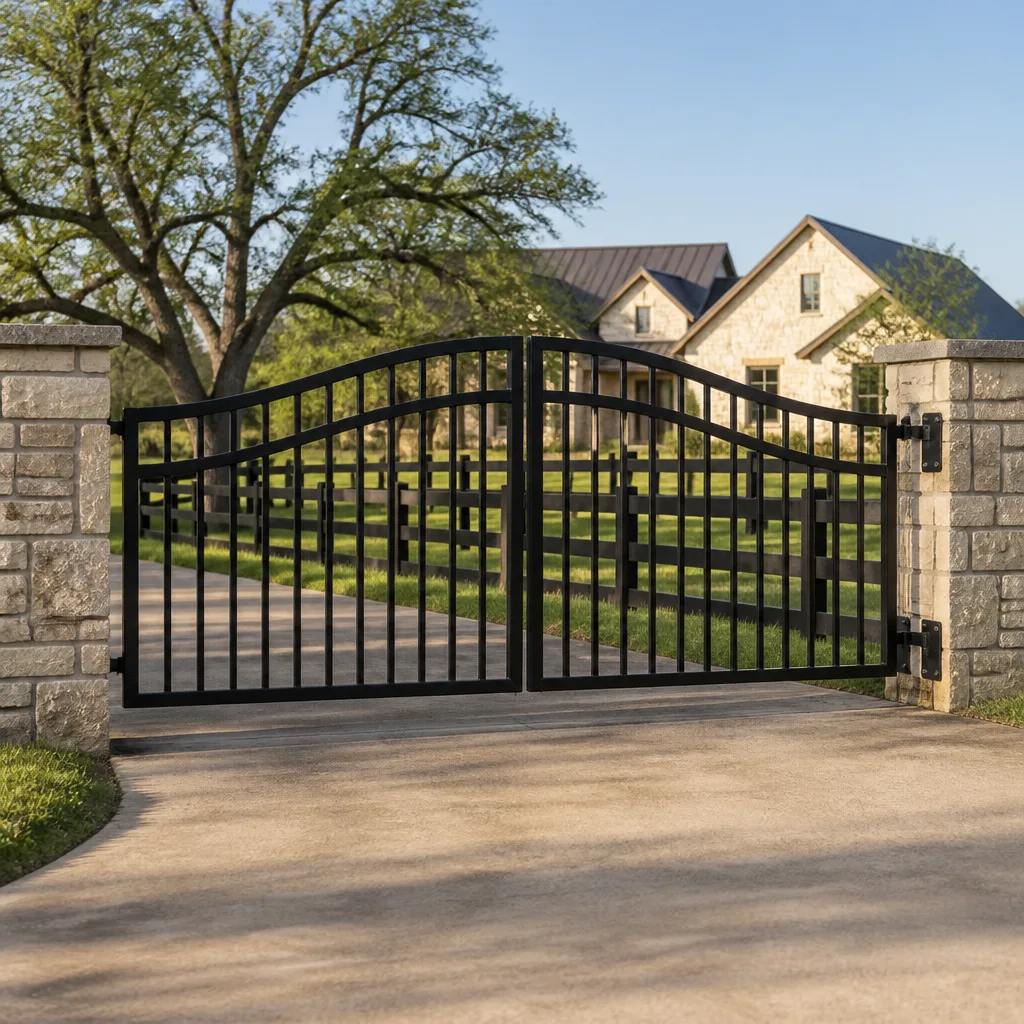 Farm & ranch
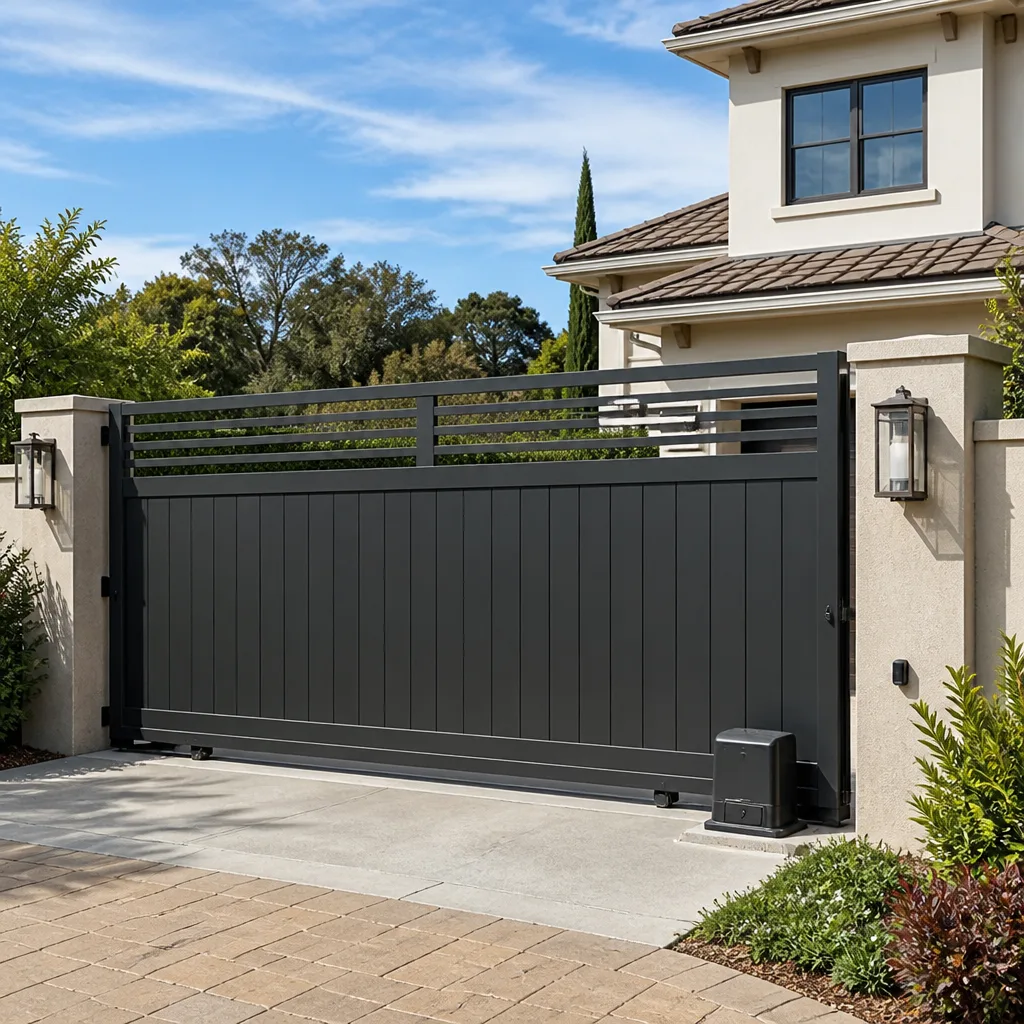 Sliding driveway gates
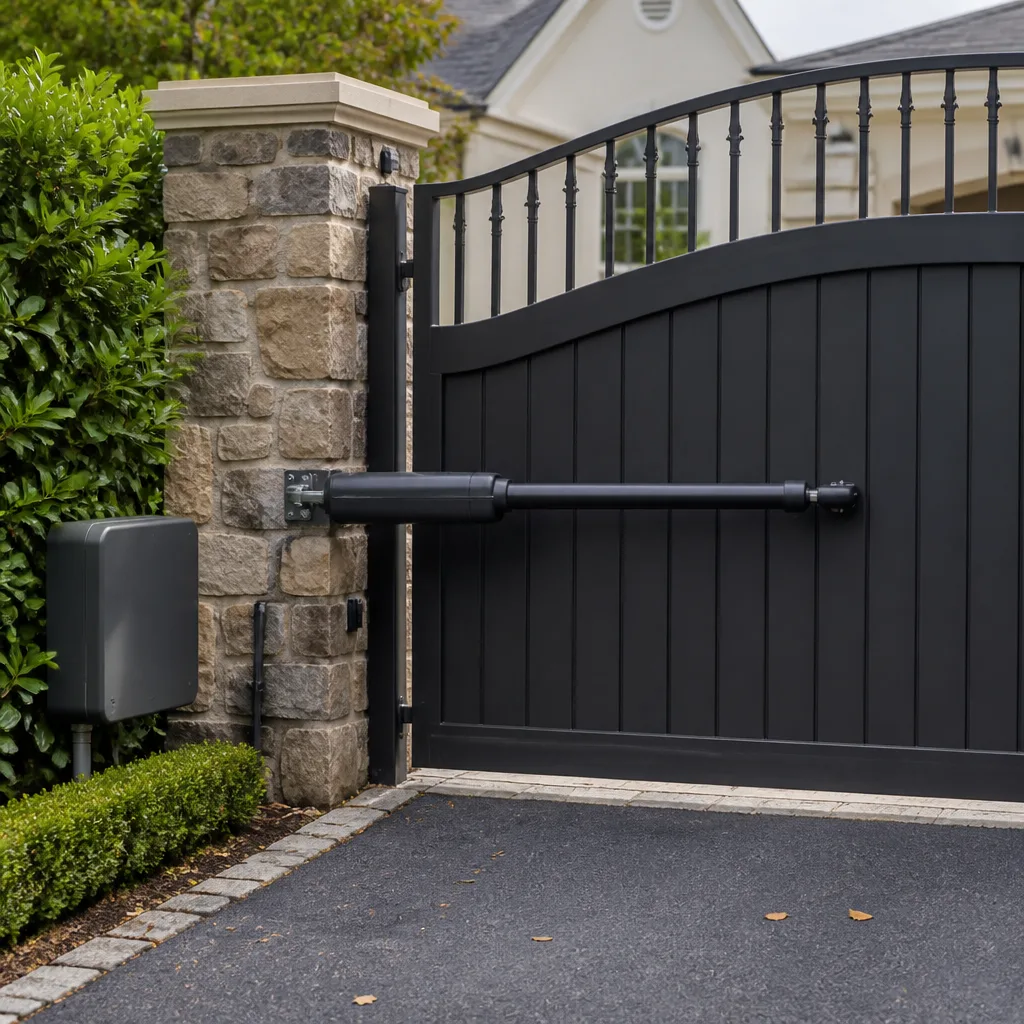 LiftMaster operators
Free on-site gate assessment - hinges, posts, and your LiftMaster or Nice gate operator checked before anything is quoted
The assessment is free and the quote is the invoice.
Get your free estimateThe Complete Guide to Gate Repair in Redlands
Most homeowners in Redlands think of a gate repair as a single fix – the motor burned out, the hinge broke, the remote stopped working. Replace the part, move on. But a gate is not a collection of parts. It’s a system. The motor talks to the control board. The control board listens to the safety sensors. The hinges carry the weight that the operator has to push. Fix one thing while ignoring the dependencies upstream, and you’ll be calling another technician in six months wondering why the same gate failed again. This guide maps the whole system so your repair actually sticks.
Quick Answer
Gate repair in Redlands typically means diagnosing a problem within a complete system – operator, hinges, track, control board, loop detector, and remote – not just swapping a failed part. Costs vary by the component and the scope of the damage, but a diagnostic visit identifies the root cause before any work is quoted. The good news: most gate failures can be repaired without replacing the entire system, and gate repair is the core of what we do.
Styles & brands we work with
- Wrought iron
- Wood & steel frame
- Farm & ranch
- Sliding driveway gates
- LiftMaster operators
Table of Contents
- The Gate as a System, Not a Part
- Redlands Conditions That Affect Gate Repair
- How to Read a Gate’s Failure Pattern
- Residential vs. Commercial Gate Repair in Redlands
- What a Complete Repair Visit Includes
- Working on the Brand You Already Have
- What to Check Yourself (and What to Leave Alone)
- Common Mistakes to Avoid
The Gate as a System, Not a Part
A gate that won’t open is rarely a single broken thing. It’s the point where one component finally gave up under pressure from another. The operator motor burns out because misaligned hinges made the gate heavier to move. The control board fries because a failing safety sensor kept sending bad signals. The remote stops working because the antenna wire degraded from years of Redlands sun. If you only replace the motor and leave the hinges dragging, the new motor inherits the same strain and dies young.
Here’s how the components interconnect on a typical automatic gate:
- The operator (motor): Moves the gate leaf. It has a rated capacity, and when hinges, rollers, or track friction push the real-world load past that rating, the motor works harder and fails sooner. This is the component most often blamed for problems that actually start elsewhere.
- The control board: The brain that receives commands from remotes, keypads, and safety devices, then tells the operator what to do. Dust, heat, and power surges are its main enemies in the Inland Empire.
- Hinges and track: The mechanical foundation. A swing gate that sags puts horizontal load on the hinges, which transfers to the operator. A slide gate that’s off its track drags the chain or belt, which overworks the motor.
- Safety sensors and loop detectors: Photo-eye beams, edge sensors, and vehicle loops that tell the system when to stop and reverse. When these degrade, the gate may refuse to close, reverse unexpectedly, or ignore commands entirely.
- Remote and access hardware: Transmitters, receivers, keypads, and intercom systems. They communicate with the control board, and when their signal weakens, the system behaves erratically – even though the mechanical parts are fine.
In our experience, the single most common repair call in Redlands is an operator that “just stopped working.” The actual cause, more often than not, is a mechanical bind upstream: a hinge that’s been slowly sagging for a year, or a slide gate track that collected enough grit to mimic a dead motor. The technician who fixes the symptom gets the gate moving for now. The technician who finds the bind gets it working for good.
Redlands Conditions That Affect Gate Repair
Redlands sits in the inland valley of San Bernardino County, where summer temperatures routinely climb past 95 degrees and the air carries fine dust from the surrounding chaparral and dry hills. Those two realities shape gate failures here in ways you won’t read about in a generic repair manual. Mild winters mean we don’t deal with frost-related damage, but heat and dust are relentless.
Here’s what Redlands specifically throws at gate systems:
- Heat-expanded metal: Steel gate frames and posts expand in summer heat. A swing gate that clears fine in January can bind in August when the metal swells. Hinges that were perfectly aligned at installation drift under repeated thermal cycling. This is a slow, seasonal problem that gets misdiagnosed as a bent gate or a weak operator.
- Dust infiltration in operators: Inland air carries particles that settle into the operator housing, coating circuit boards and clogging gear trains. Over time, that dust becomes a conductor for moisture and a resistor for signals. Operators installed without good sealing or regular cleaning fail earlier here than in coastal climates.
- UV-degraded wiring and plastic: The sun in Redlands is harsh on exposed low-voltage wiring, plastic junction boxes, and remote receiver housings. Wire insulation turns brittle, cracks, and shorts. Photoelectric sensor lenses haze over and stop detecting properly. Plastic components fade and warp. Anything exposed on a gate or fence line ages faster than you’d expect.
None of these are catastrophic in a single day. They accumulate. A hinge binds a little more each summer. Dust builds inside the operator housing, season after season. The wiring cracks slowly under UV until one day it doesn’t. When we diagnose a gate in Redlands, we’re looking at that history – not just the symptom in front of us. That’s how you find the problem that will still be fixed a year from now.
How to Read a Gate’s Failure Pattern
Before you call anyone, spend ten minutes observing how your gate fails. The way a gate malfunctions is a diagnostic map, and knowing the pattern helps you describe the problem accurately. It also protects you from paying for a replacement when a repair would do. Here’s how to decode what you’re seeing:
- Gate opens but won’t close: This almost always points to the safety system, not the motor. A photo-eye beam is misaligned or dirty, an edge sensor is triggering falsely, or a vehicle loop detector is stuck in “occupied” mode. The gate thinks something is in the way, so it refuses to close. Check for plants that grew into the beam path, spider webs on the sensor lens, or debris on the vehicle loop area.
- Gate closes but won’t open: This is typically an access signal problem – the remote battery, the keypad code, the intercom, or the receiver on the control board. The mechanical system is fine; it’s just not hearing the command. Try the manual release first. If the gate opens manually, the problem is in the signal path.
- Gate moves slowly or stalls halfway: This suggests mechanical resistance. Sagging hinges, a dragging wheel, low hydraulic fluid (on hydraulic operators), or grinding gears. The motor is working against friction it wasn’t designed for. Run this pattern long enough, and the motor overheats and trips its thermal breaker.
- Gate opens a few inches, stops, and reverses: This is a force-sensitivity or obstruction-detection issue. The operator’s brain senses too much resistance and reverses to avoid injuring someone or damaging the gate. The underlying cause is usually mechanical bind, but it can also be a failing capacitor or a control board sending bad force readings.
- Gate works intermittently, especially after rain or on hot days: Intermittent failures point to connection problems, heat-sensitive components, or moisture ingress. A cracked solder joint expands and loses contact in heat. A loose wire in the control board shifts with vibration. A corroded splice gains resistance when humidity rises.
Write down exactly what the gate does, when it happens, and what the weather was like. That information lets our technicians form a hypothesis before they arrive. It’s the difference between a 45-minute fix and a two-hour investigation where we’re trying to reproduce a problem you can describe in 30 seconds.
Residential vs. Commercial Gate Repair in Redlands
Not all gate repairs have the same scope. A single-family driveway gate in Redlands and a commercial access gate at a warehouse or apartment complex are different animals – different duty cycles, different operator sizes, different safety requirements. Misclassifying yours costs money, either because you pay for commercial-grade equipment you don’t need, or because you put a residential operator on a gate that cycles dozens of times a day and fail it in months.
Residential Gate Repair
Residential gates in Redlands neighborhoods – from the historic districts near downtown to the newer developments further out – typically cycle fewer than 20 times a day. Operators are smaller, hinges are lighter, and the demands are modest. Most residential repairs involve swing gate hardware, light-duty slide gate operators, single-family intercom or keypad systems, and the occasional control board replacement. The key thing to understand: residential equipment is not built for constant cycling. If your gate opens and closes more than 40 or 50 times a day, you’re in commercial territory, even if it’s a house.
Commercial Gate Repair
Commercial gates in Redlands – at industrial parks, apartment communities, schools, and business lots – cycle hundreds of times daily. The operators are heavier, the safety systems are more complex, and the stakes include liability for pedestrians and vehicles. Commercial repairs often involve larger hydraulic or industrial slide operators, vehicle loop detectors at multiple positions, access control integration, and emergency release systems that must work flawlessly. When a commercial gate fails, the ripple effects are immediate: delivery trucks blocked, tenants calling, security compromised.
A repair visit for a commercial gate is not a bigger version of a residential visit. It’s a different scope of work. The technician has to understand duty cycles, traffic patterns, and safety compliance. If a company quotes you the same flat rate for both, ask them how they’re sizing the repair. The answer will tell you whether they understand the difference.
What a Complete Repair Visit Includes
Most people can’t tell a thorough gate repair from a quick patch job until the gate breaks again. But there are clear differences in what a complete visit covers. Understanding them helps you evaluate any technician who shows up, whether it’s us or anyone else.
A complete repair visit should include:
- Full-system diagnosis, not just symptom confirmation: The technician traces the problem to its root cause. That means checking hinge alignment on a swing gate, track condition on a slide gate, wiring continuity on the control board, and sensor operation – even when the obvious failure is just a dead remote battery.
- Load testing on the operator: After the immediate repair, the operator should be tested against the gate’s actual movement. A motor that works on a bench can fail on a gate that’s 40 pounds heavier than it should be because of a dragging wheel. The test catches that.
- Safety system verification: Photo-eye alignment, edge sensor response, force reversal settings. If the gate won’t reverse when it meets resistance, the repair isn’t done, no matter how smoothly the gate opens.
- Wiring inspection at connection points: Loose terminal screws, corroded splices, and cracked insulation are the most common source of intermittent failures. A complete visit checks these, not just the component that obviously failed.
- Documented findings: You should know what was found, what was fixed, and what’s visibly aging. That’s how you avoid the surprise failure next quarter.
A quick-fix visit swaps the failed part and leaves. A complete visit spends the extra 15 minutes confirming the system around the part is healthy. That’s the difference between a gate that works for years and one that’s back on the phone tree in a few months.
If you’re in Redlands and wondering what’s going on with your gate, call Gate Repair Redlands at (844) 405-5765. The estimate is free, and the price is set in writing before any work begins.
Working on the Brand You Already Have
Every gate operator brand has its own quirks. A FAAC hydraulic operator behaves differently from a BFT electromechanical one. A Linear control board has different diagnostic patterns than a Viking. The team at Gate Repair Redlands works on nine major brands – LiftMaster, FAAC, BFT, Linear, Viking, Ghost Controls, DoorKing, Elite, and Mighty Mule – which means the technician who shows up already knows the personality of the system on your property. We don’t guess; we recognize.
That matters because operators from different manufacturers fail in different ways. A FAAC hydraulic operator that’s slow or spongy often points to low fluid or a failing pump. A BFT sliding gate operator that won’t hold position might have a limit switch problem or encoder drift. A Linear swing operator that stalls mid-cycle could have a capacitor issue or a misread obstruction. If a technician has never touched your brand, they’re learning on your gate. That’s not expertise; it’s experimentation on your dime.
Brand-agnostic is not the same as brand-ignorant. We’re not tied to selling you a particular manufacturer, so the diagnosis is based on what your system actually needs – not what generates the biggest replacement ticket. We’ll repair what’s repairable and tell you honestly when a component has reached the end of its service life. The recommendation comes from the gate’s condition, not our inventory.
What to Check Yourself (and What to Leave Alone)
Some gate problems are safe and sensible for a homeowner to inspect. Others involve heavy moving parts, high-voltage wiring, or systems that can injure someone badly if handled wrong. Knowing which is which saves you money and keeps you safe. Here’s a practical split based on what we see in Redlands:
What you can check yourself:
- Remote battery and programming: This is the #1 no-cost fix. Swap the battery, check the keypad code, and confirm the remote is actually sending a signal. Many “gate repairs” are just a dead transmitter.
- Visible obstructions in the track or swing path: Leaves, gravel, landscape rocks, and overgrown plants routinely block a gate’s travel. Clear the path and see if the gate moves.
- Power to the operator: Confirm the breaker isn’t tripped and the outlet has power. A surge from a summer thunderstorm can knock a breaker out and leave the gate looking dead.
- Photo-eye alignment and cleanliness: If the gate won’t close, wipe the sensor lenses and check that nothing grew in front of them.
What to leave to a trained technician:
- Control board wiring and replacement: The operator’s internal wiring carries line voltage and can shock you. A wrong connection can destroy the board or the operator, turning a $200 repair into a $1,500 replacement.
- Operator motor or hydraulic work: A motor under tension, a hydraulic line under pressure, or a chain drive with stored energy can hurt you badly. These are not DIY repairs, full stop.
- Hinge replacement on a heavy gate: Taking a 400-pound gate off its hinges requires proper support and a plan. If the gate falls, it can crush whatever is underneath it. Professionals have the jacks and the process.
- Slide gate off-track recovery: A slide gate off its rail is under tension and can shift suddenly. The track and the gate frame both need inspection before the gate is re-slung.
The general rule: if it’s outside the operator housing, visual and mechanical, you can look. If it’s inside the operator, live electrical, or load-bearing, call a professional. Gate systems can move hundreds of pounds without warning. A simple mistake near a hinge or a chain can put you in an emergency room.
For a full electric gate repair in Redlands, call (844) 405-5765. We answer 24/7. Fast dispatch from 7am to 7pm, Sunday through Friday. The estimate is free and the price is quoted and agreed before any work starts.
Common Mistakes to Avoid
- Ignoring the early warning signs: A gate that scrapes, groans, or hesitates is telling you something. By the time it stops entirely, a minor hinge adjustment has become a blown motor and a control board. Listen for changes while the gate still moves.
- Lubricating a broken component: Spraying lubricant on a sagging hinge hides the bind temporarily. The hinge continues to wear, the operator keeps fighting the load, and the eventual failure is bigger than it had to be. Grease is maintenance; it’s not a repair.
- Replacing the operator without checking the mechanical system: A new motor on bad hinges fails early. The mechanical issues have to be addressed first, or you’re putting a fresh engine in a car with a seized axle.
- Buying the cheapest replacement part available online: A no-name control board costs half as much and fails twice as fast – or doesn’t talk correctly to your existing safety sensors. Compatibility matters more than price. A part that doesn’t communicate with the rest of the system creates problems that don’t exist with the right component.
- Disabling a safety sensor to get the gate working: Cutting the sensor out of the circuit gets the gate moving, but it also removes the system that stops the gate from closing on a child, a pet, or a car. Never bypass a safety device to solve a nuisance problem.
- Misjudging duty cycle: A homeowner who installs a residential operator on a gate that cycles hundreds of times per day is paying for a failure. Duty cycle is about how often the operator runs, not how big the gate is. Be honest about usage when a technician asks.
- Waiting for the gate to fully fail before calling: A complete failure costs more than an early repair, every time. The component that eventually dies was usually stressed for months by a smaller, cheaper problem upstream. Catch it early and the fix is manageable.
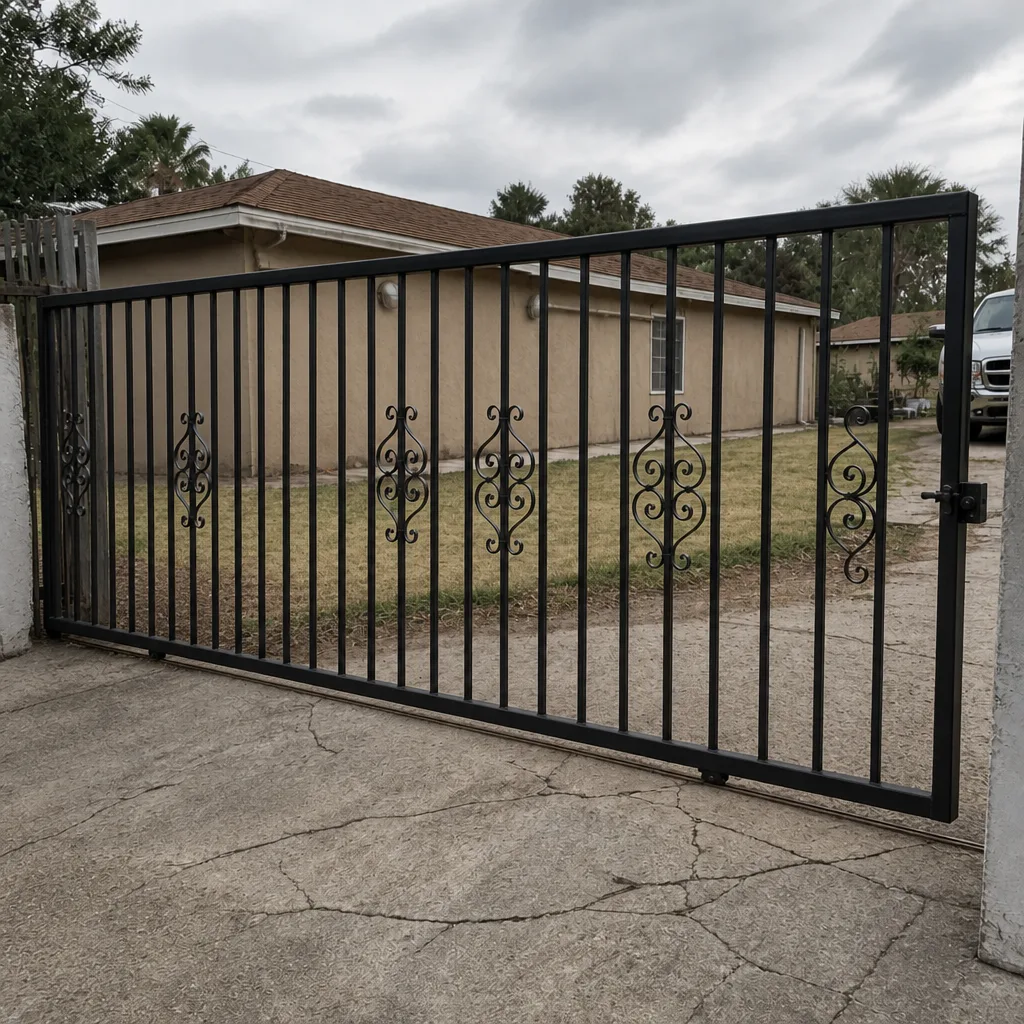
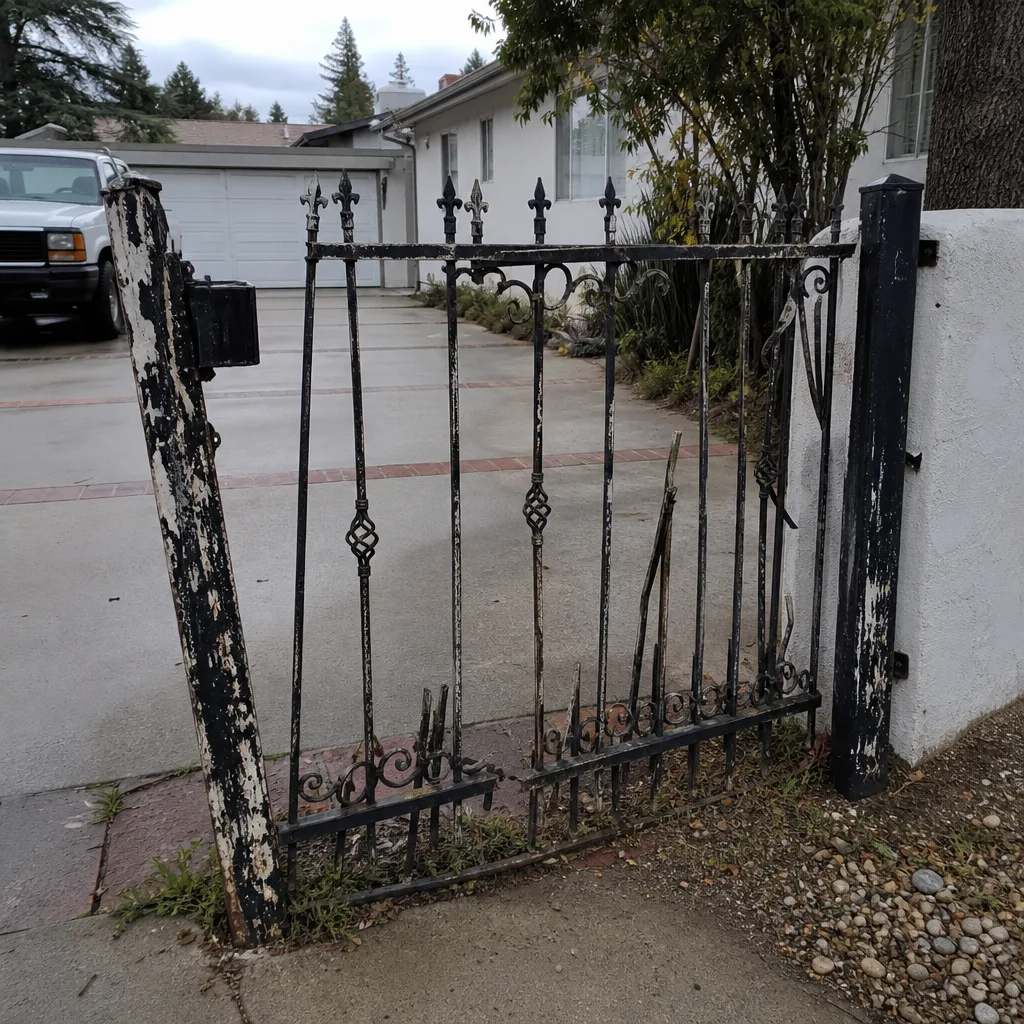
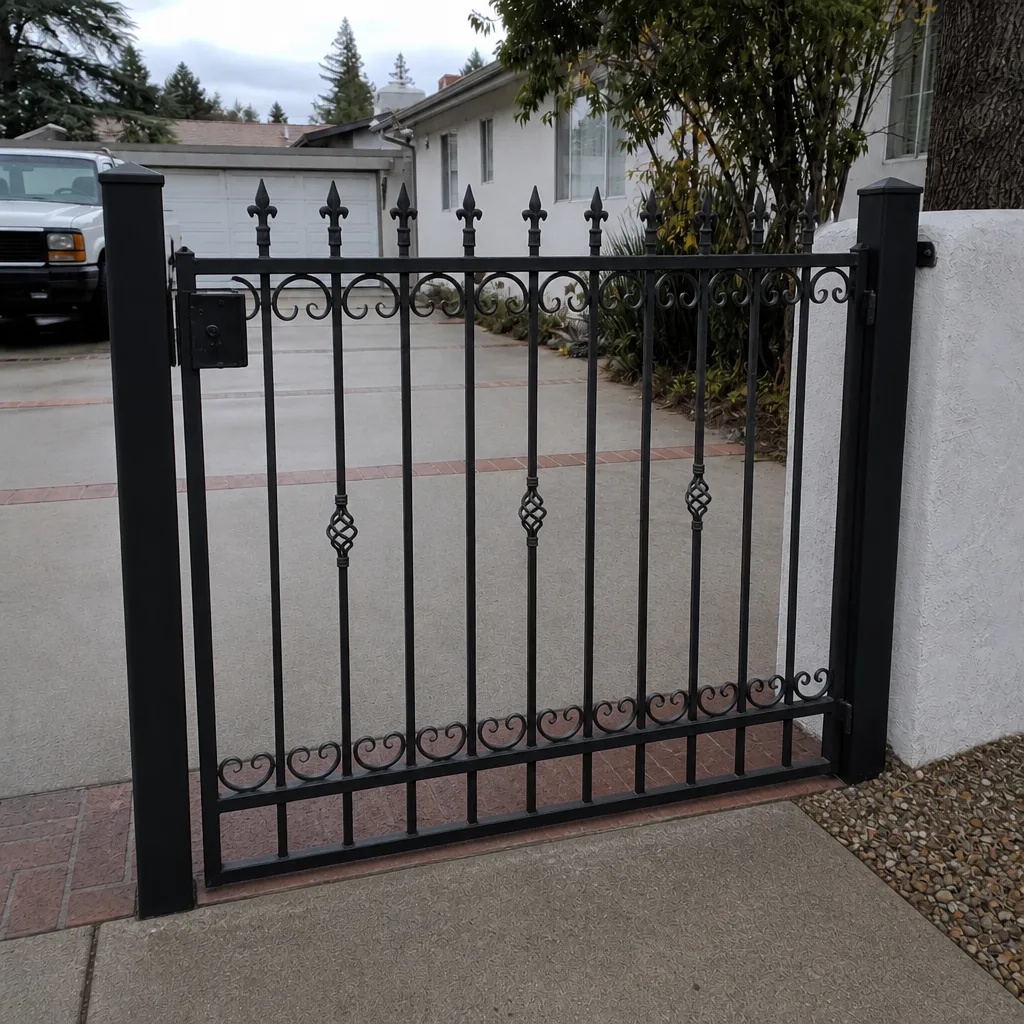
See the difference
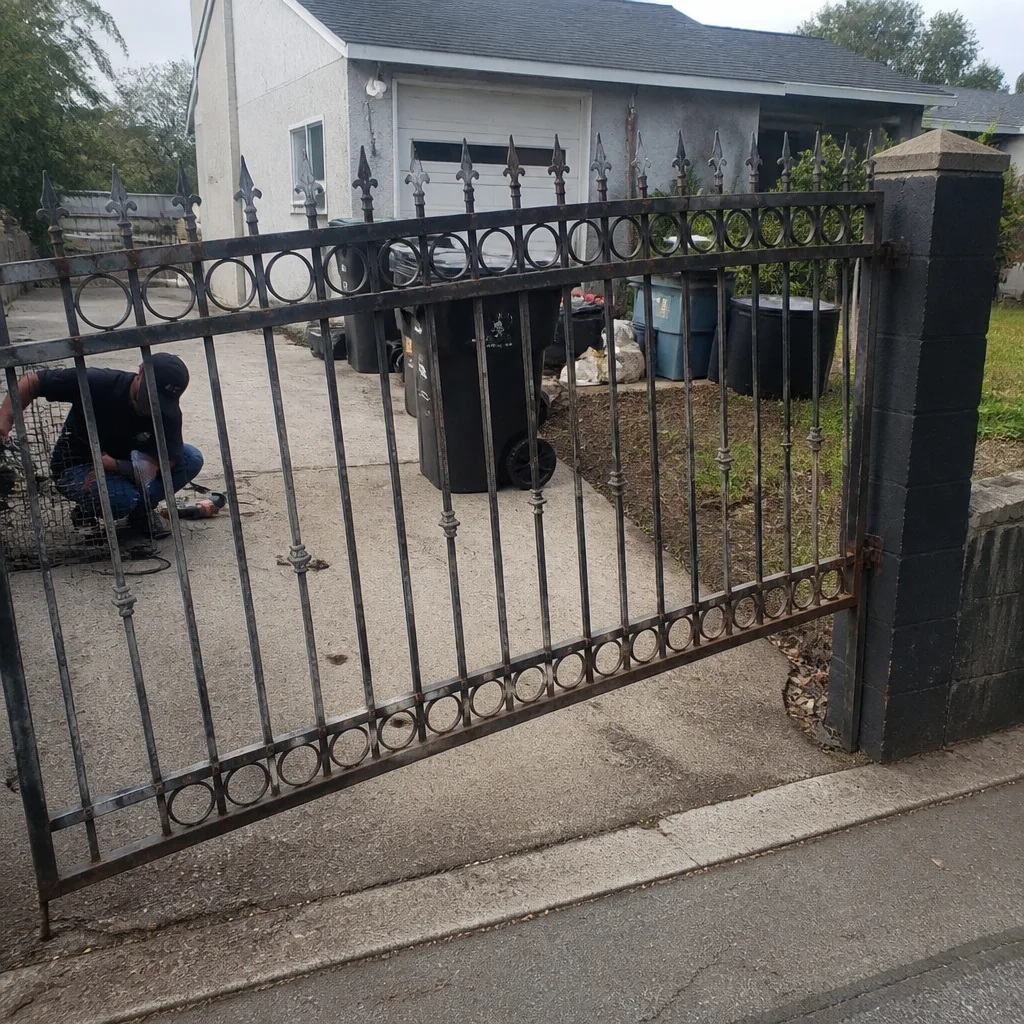 Before
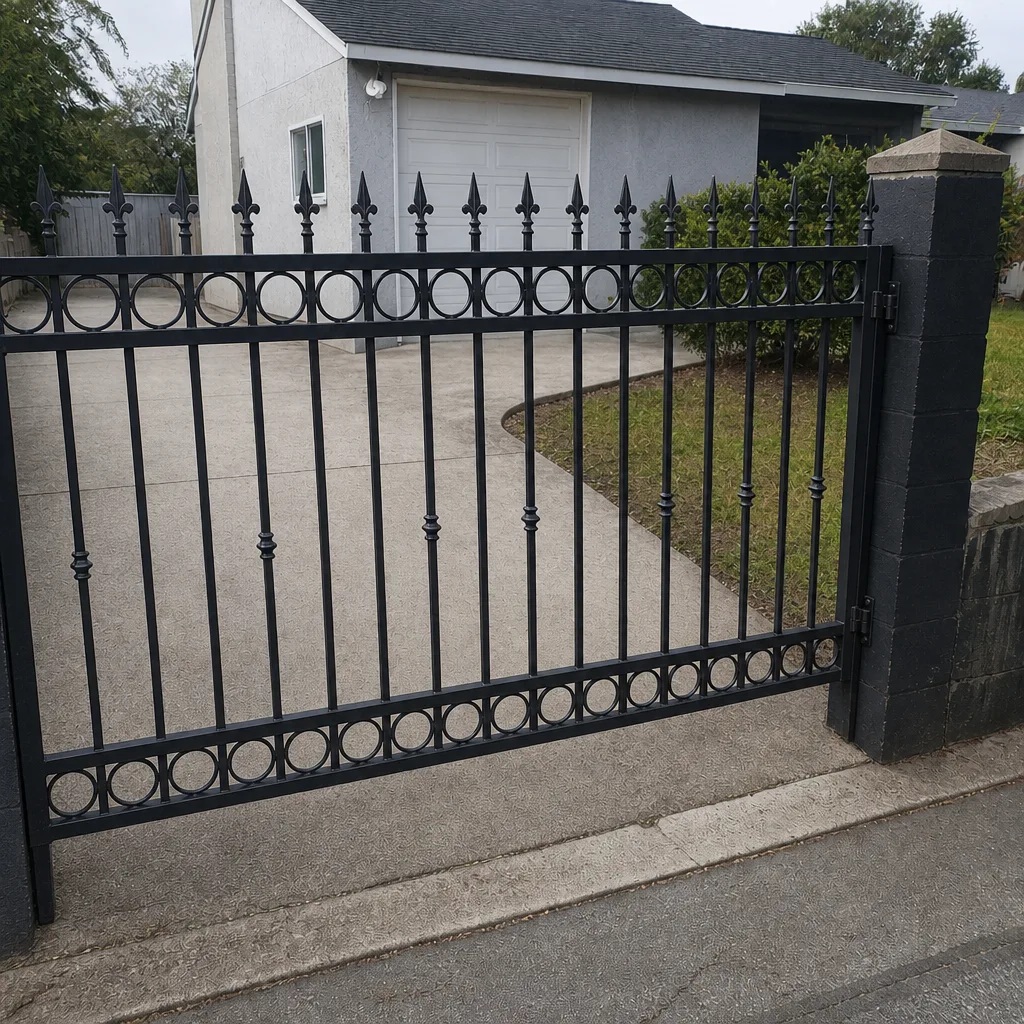 After
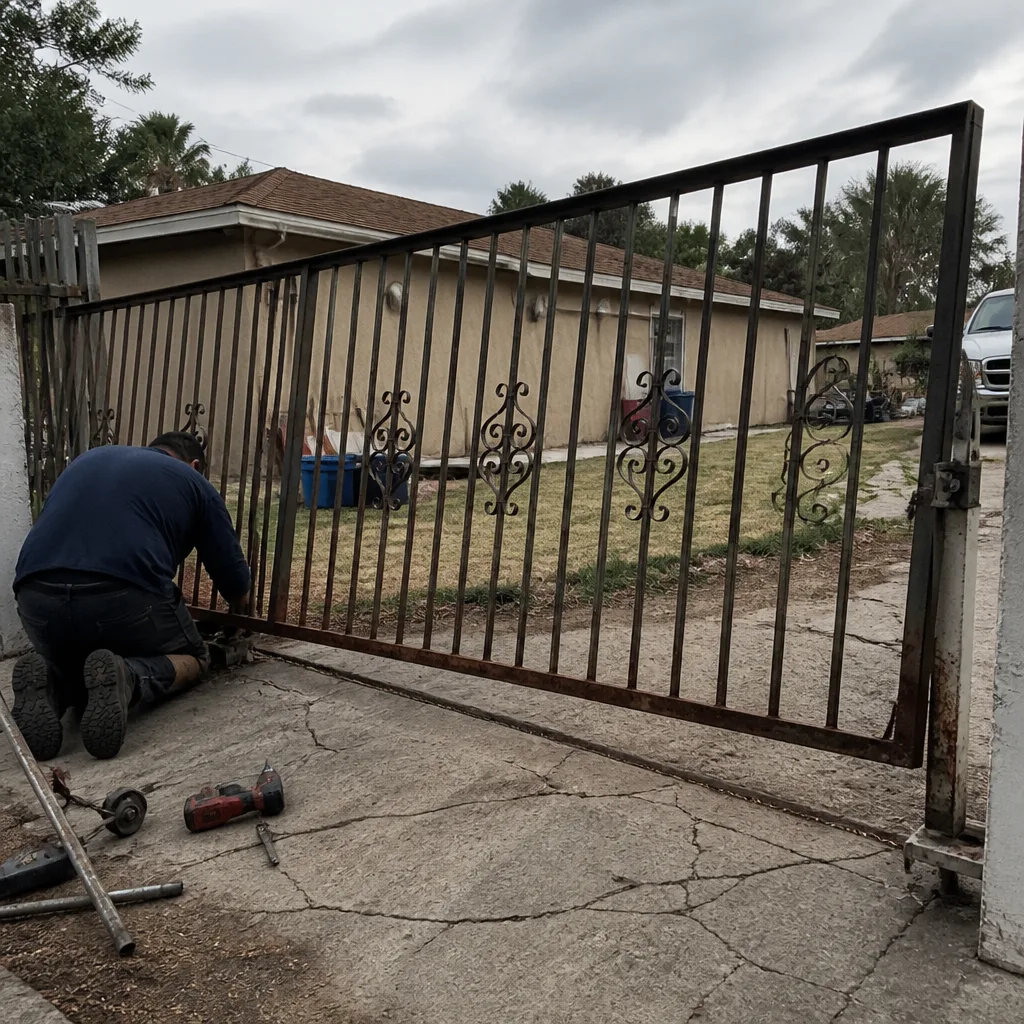 Before
 After
 Before
 After
When to Call a Professional
Call a gate specialist when the problem involves anything mechanical that moves a heavy object, anything electrical inside the operator, or any safety system that prevents injury. That covers hinge and track problems, operator failures, control board issues, wiring faults, and sensor malfunctions. If the gate won’t move, won’t stop, won’t reverse on obstruction, or makes a sound it never made before, that’s a professional call.
If your gate is making a noise that worries you, binding visibly, failing intermittently, or just doesn’t feel right, don’t wait for it to strand you or a delivery driver. Gate Repair Redlands offers free estimates in Redlands. Call (844) 405-5765. We answer 24/7. Fast dispatch from 7am to 7pm, Sunday through Friday. We’ll diagnose the problem, explain what’s actually wrong, and give you a written price before any work begins.
We’re gate specialists, not generalists. From the motor to the hinge, our entire skill set is built around gate systems – so the diagnosis is based on how the components interact, not just which part looks broken. If you’re in the Redlands area, we’d rather get your gate back to secure in one visit than sell you a replacement you don’t need.
Frequently Asked Questions
Gate repair costs in Redlands vary by the component and the scope of the damage. A simple hinge adjustment or remote reprogramming may be a minimal call, while a control board replacement or operator rebuild runs higher. The price is set per job by a written estimate, never before the gate has been diagnosed. Call (844) 405-5765 for a free estimate – we’ll tell you what the gate actually needs before quoting a number.
In most cases, yes. We dispatch technicians from 7am to 7pm, Sunday through Friday, and most residential gate repairs in Redlands are completed in a single visit. We answer the phone 24/7, so call (844) 405-5765 and we’ll book you into the next available opening. The faster we diagnose the system, the sooner your gate is working.
We service the brand you already have. Our technicians are experienced with LiftMaster, FAAC, BFT, Linear, Viking, Ghost Controls, DoorKing, Elite, and Mighty Mule – nine major systems. We’re not tied to selling you a particular brand, so the recommendation is based on your gate’s condition, not our inventory. If your operator is repairable, we’ll repair it.
The answer depends on what failed and why. Many operator failures in Redlands are caused by upstream problems – misaligned hinges, dust contamination, wiring faults – and can be repaired without replacing the operator. A replacement only makes sense when the operator itself is beyond economical repair or its components are obsolete. A proper diagnosis tells you which. Call (844) 405-5765 and we’ll tell you honestly.
Check the remote battery and keypad code, clear any visible obstructions from the gate’s path, confirm the circuit breaker hasn’t tripped, and wipe the photo-eye lenses if the gate refuses to close. If those checks don’t solve the problem, the issue is likely mechanical or inside the operator – and that’s a call to a professional. We’ll take it from there.
Yes. Electric gate repair is a core competency at Gate Repair Redlands, covering the operator motor, control board, safety sensors, loop detectors, and low-voltage access wiring. Whether the issue is in the power run to the operator or the safety edges that protect your family and vehicles, we diagnose and repair the full electrical system – not just the moving parts.
A broken gate is an open barrier, and an open barrier is a problem. In Redlands, where many properties use gates as the first physical layer of security, a gate stuck open or non-operational changes the equation for both your privacy and your liability. The faster the repair, the sooner your property is back to the security posture you designed. Call (844) 405-5765 – we answer 24/7.
The Bottom Line
A gate repair in Redlands is not a single part swap. It’s a diagnosis of a complete system – mechanical, electrical, and control – where the failure you see is often the result of a problem upstream. Redlands heat and dust accelerate wear in predictable ways. Understanding the failure pattern, knowing the difference between residential and commercial scope, and insisting on a complete repair visit are the three things that keep a gate working for years instead of months. When your gate fails, don’t guess. Get a diagnosis from a specialist who works on the brand you already have. Call Gate Repair Redlands at (844) 405-5765. We answer 24/7. Fast dispatch from 7am to 7pm, Sunday through Friday. Free estimates, written pricing before any work starts, and technicians whose entire skill set is built around gates.
Written by the team at Gate Repair Redlands, serving Redlands since 2018.