
Last updated November 5, 2026
 Wrought iron
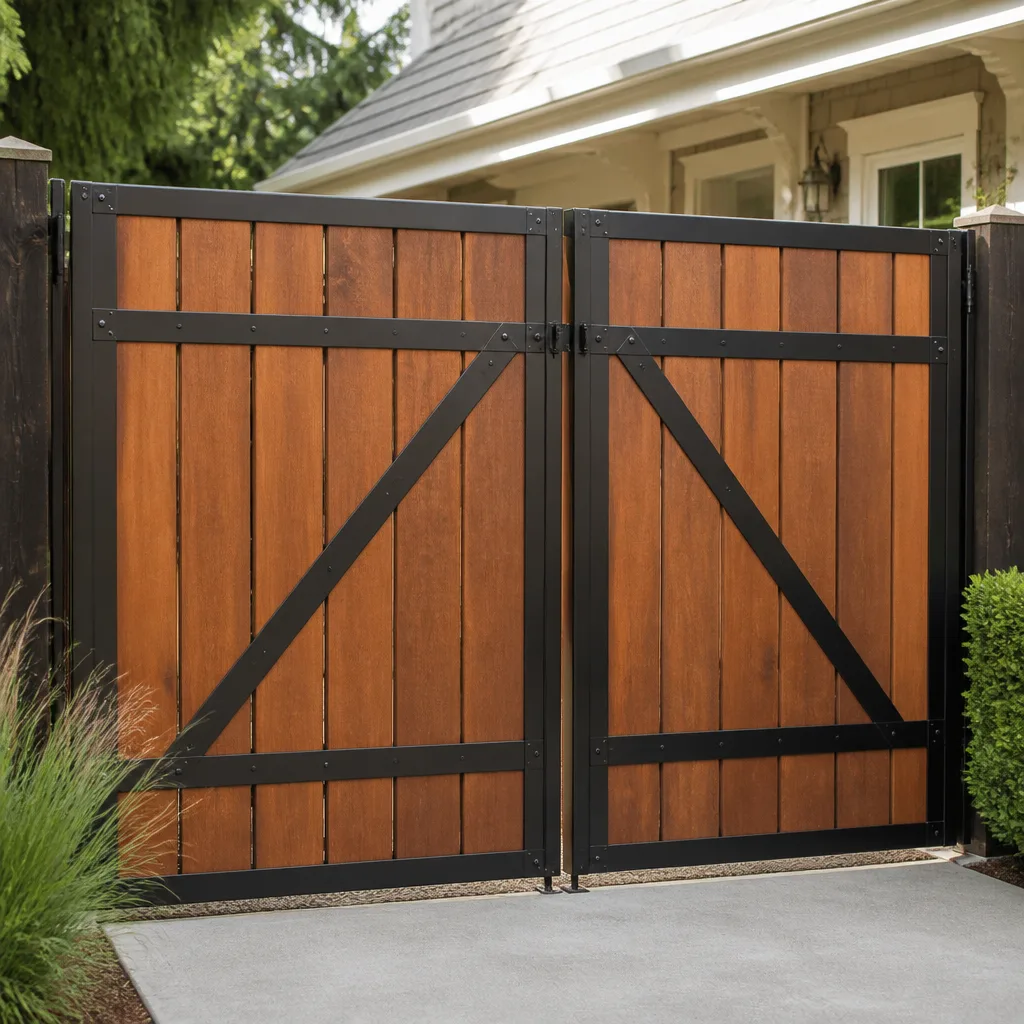 Wood & steel frame
 Farm & ranch
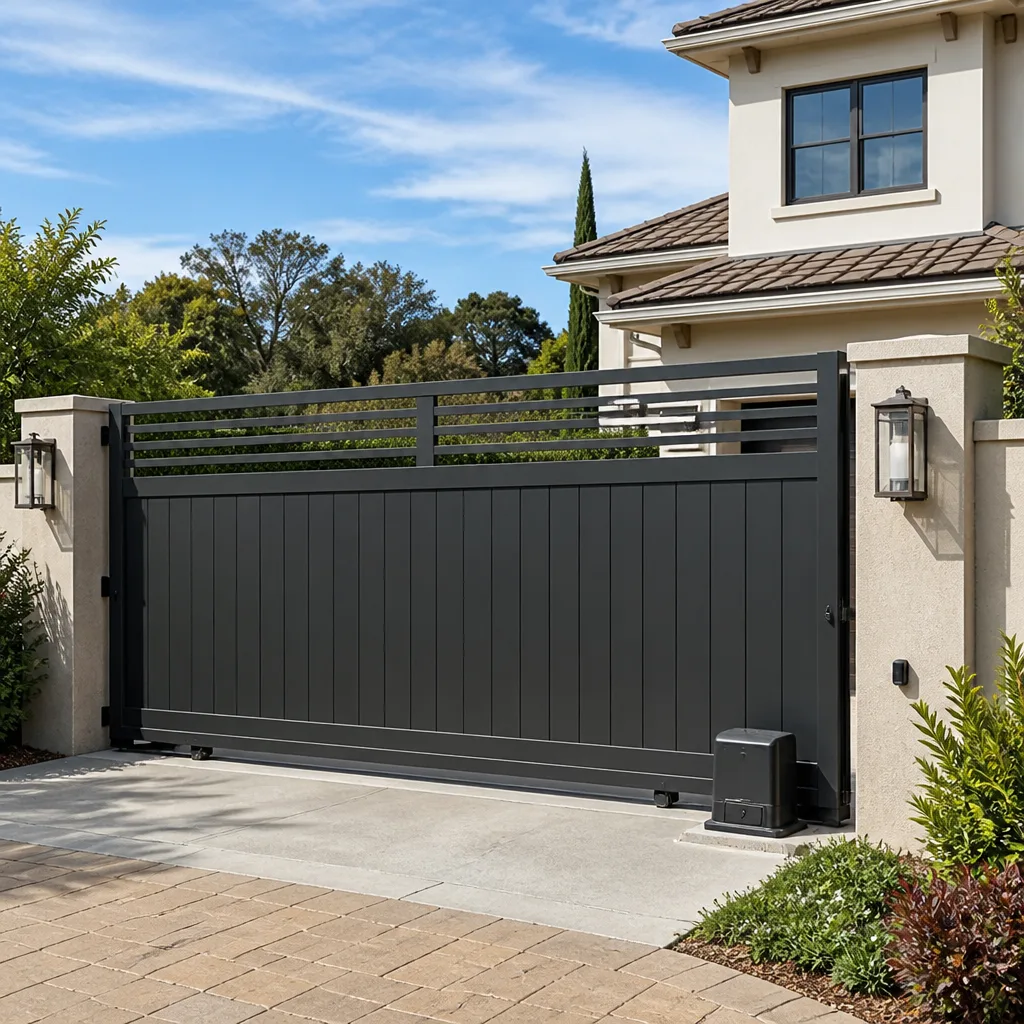 Sliding driveway gates
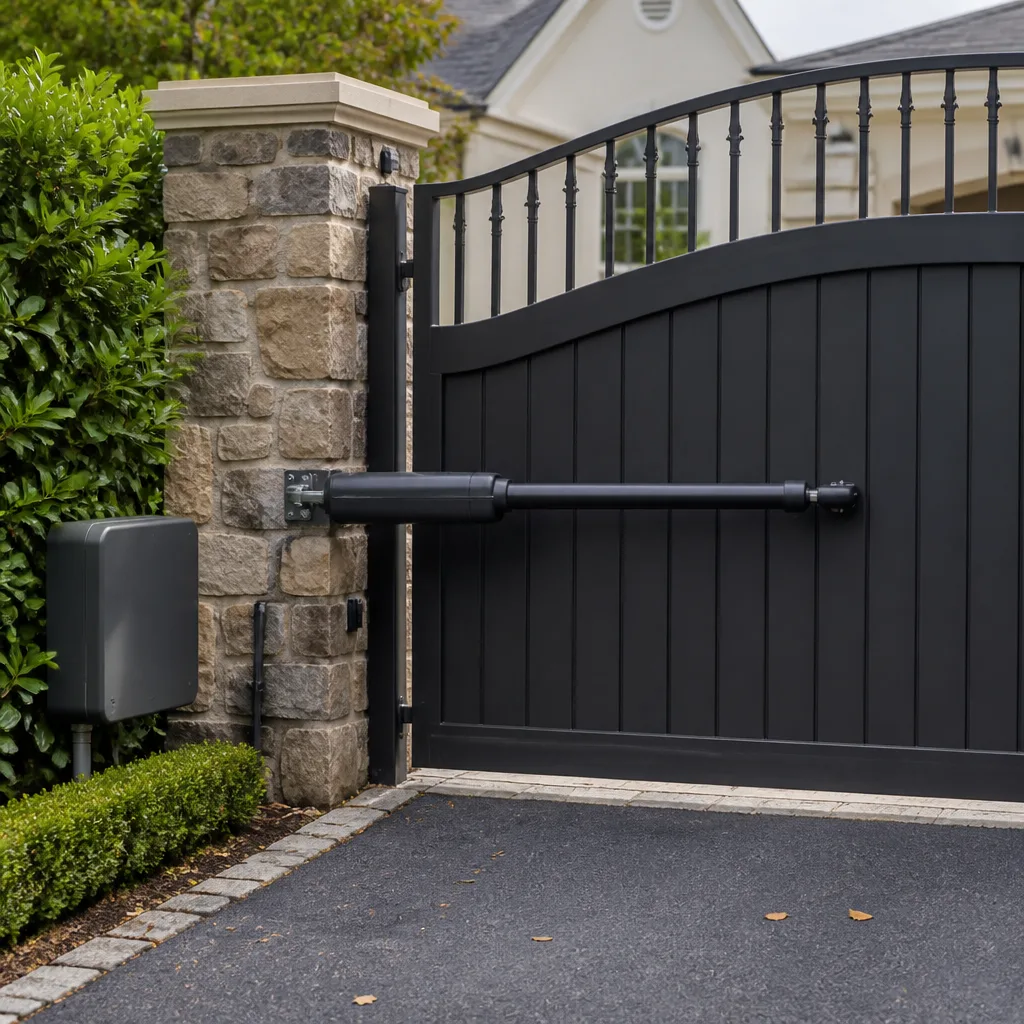 LiftMaster operators
Free on-site gate assessment - hinges, posts, and your LiftMaster or Nice gate operator checked before anything is quoted
The assessment is free and the quote is the invoice.
Get your free estimateDIY vs Professional Gate Repair: The Redlands Homeowner’s Decision Guide
Most gate repair advice online gets the framing wrong. It treats DIY as a question of mechanical courage and professional service as a fallback for the timid. The truth is closer to this: a homeowner in Redlands can safely handle about a third of common gate problems with a socket set and an afternoon, but the other two-thirds carry consequences that make amateur work a poor trade no matter how capable the hands doing it. This guide draws the line by task, not by attitude. You’ll learn which jobs are genuinely yours to own, which ones risk turning a $40 fix into a $700 repair, and where the electrical and liability realities of automated gate systems in California make a specialist the only sensible call.
Quick Answer
DIY is the right choice for Redlands homeowners only when the task is mechanical, non-electrical, and reversible: clearing debris from a slide gate track, lubricating hinges, reprogramming a remote, or testing a manual release. Professional service is the right call for anything involving operator wiring, control boards, safety sensors, gate tension, or panel weight. The dividing line is simple: if a mistake can injure someone, damage a $300-plus component, or violate California safety codes, call a gate specialist.
Styles & brands we work with
- Wrought iron
- Wood & steel frame
- Farm & ranch
- Sliding driveway gates
- LiftMaster operators
Table of Contents
- Task-by-Task Classification: DIY-Safe, DIY-Risk, Professional-Required
- California Liability and UL 325: What Self-Installed Gate Work Can Cost You
- Tools and Diagnostic Equipment You Probably Don’t Own
- When DIY Voids a Manufacturer Warranty
- Redlands Scenarios Where DIY Makes Sense
- Why Electric Gate Systems Punish Guesswork
- Common Mistakes to Avoid
- When to Call a Professional
- Frequently Asked Questions
Task-by-Task Classification: DIY-Safe, DIY-Risk, Professional-Required
Here is the honest breakdown most gate repair articles avoid. We’re a Gate Repair Redlands team, and we’d rather help you do the easy things yourself than lose your trust recommending ourselves for jobs you don’t need us for. The table below rates the most common gate problems in Redlands by what’s actually involved.
| Task | Classification | Reasoning |
|---|---|---|
| Clearing debris from a slide gate track | DIY-safe | Mechanical, non-electrical, no tension. A stuck wheel or packed dirt is a broom-and-shovel job. |
| Lubricating hinges and rollers | DIY-safe | Accessible, low risk. Use a lithium-based grease on metal-to-metal contact points. |
| Reprogramming a remote control | DIY-safe | Most remotes, from Mighty Mule to LiftMaster, follow a simple learn-button sequence in the manual. |
| Operating the manual release during a power outage | DIY-safe | Every automatic gate has a mechanical release. Test it twice a year so you know it works when you need it. |
| Replacing a gate remote battery | DIY-safe | Pop the cover, read the battery type, swap it. Ten-minute job. |
| Adjusting travel limits on an operator | DIY-risk | You’re adjusting motor parameters. Setting the gate to over-travel can shear a hinge or warp a panel. |
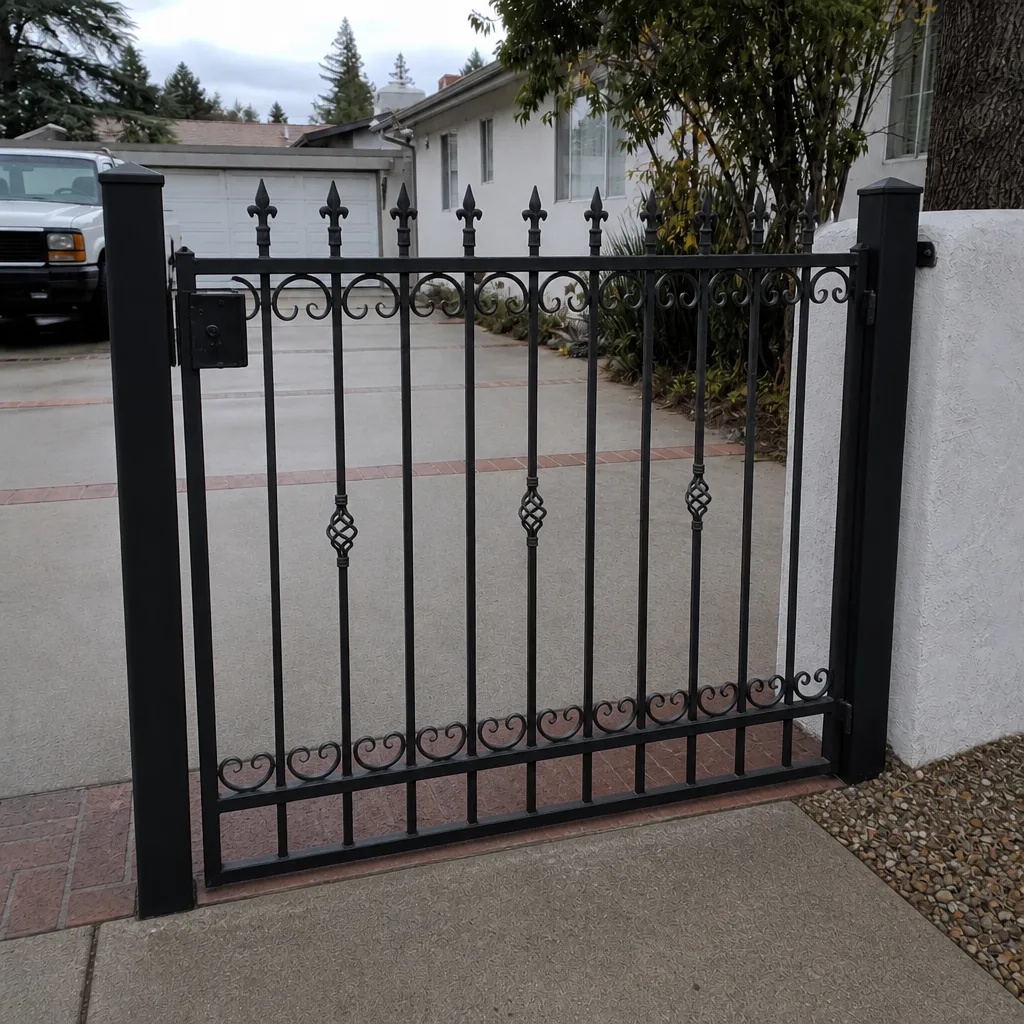
| Replacing a hinge on a wrought iron gate | DIY-risk | The gate weighs more than most people estimate. It needs support before you remove the old hinge. |
| Straightening a sagging gate | DIY-risk | Sagging usually signals a failing hinge or a shifted post. The visible symptom is rarely the actual cause. |
| Replacing a control board | Professional-required | One incorrect wire lands on the wrong terminal and a $400 board is destroyed before the gate moves. |
| Diagnosing and replacing safety sensors | Professional-required | Photo eyes and safety loops are what stop a closing gate from crushing a person or a car. California treats them as code-regulated safety devices, not conveniences. |
| Re-tensioning or replacing gate hardware under load | Professional-required | Heavy panels and stored mechanical energy. Injuries here are not scrapes; they’re crush or amputation events. |
| Any repair involving operator wiring, including a burned-out motor | Professional-required | Electrical diagnosis starts with understanding the system, not swapping parts. Metering a live board is not a “watch one video” task. |
A good rule of thumb for Redlands homeowners: if the repair requires lifting more than a corner of the gate or touching a wire that carries power, the answer stops being DIY. The stakes rise with the weight of the panel and the complexity of the operator.
California Liability and UL 325: What Self-Installed Gate Work Can Cost You
Here’s where the DIY conversation gets serious, and where most national gate articles miss the point entirely. California is not a permissive state when it comes to automated gates. UL 325, the national safety standard for gate operators and related equipment, sets requirements for entrapment protection: the sensors, edges, and force settings that stop a moving gate before it injures someone. A homeowner who modifies or self-installs an automated system and bypasses, disables, or fails to restore a safety device assumes liability for whatever happens next.
In practical terms, that means a DIY repair that leaves a photo eye unplugged “temporarily” or a force setting turned up to push through a sticky track is not just a minor shortcut. If a neighbor’s child is injured by that gate, the homeowner faces a liability claim that an insurance adjuster will examine through California’s lens, not the internet forum’s. The requirements are not optional, and they apply to existing operators being repaired, not only new installations.
What should a Redlands homeowner check before attempting any work on an automated gate? Start by asking whether the task touches any wiring, any sensor, any setting on the operator, or any component that affects how the gate reverses when it meets resistance. If the answer is yes, get familiar with what UL 325 requires of that system before you turn a wrench. Or call a specialist who already knows. We can tell you this from experience: we’ve had Redlands homeowners bring us gates with the safety loops dug up and left disconnected because a YouTube video didn’t mention them. The gate worked. So did the lawsuit exposure.
Tools and Diagnostic Equipment You Probably Don’t Own
There is a gap between what a capable DIYer owns and what a mid-level gate repair actually requires. It’s not about needing a fancier screwdriver. It’s about diagnostic equipment that costs real money, sees use once, and then sits in a drawer until the next gate issue three years later.
What the typical Redlands homeowner has:
- Socket set and combination wrenches
- Impact driver or cordless drill
- Level, tape measure, pry bar
- Multimeter (maybe, and usually a $25 model)
What a real electric gate diagnosis often requires:
- A quality true-RMS multimeter: Needed for checking voltage and continuity on operator circuits. A cheap meter gives you a number. A good meter gives you a number you can trust.
- Non-contact voltage tester: Confirms the circuit is dead before you touch the wiring. The “flip the breaker and hope” method is how people get zapped.
- Memory or ladder logic reader for operator diagnostics: Many modern operators from FAAC, BFT, and LiftMaster store fault codes. Reading those codes requires manufacturer-specific knowledge or tools, not just a screwdriver.
- Loop detector tester: Ground loops under the driveway tell the gate when a car is present. Testing them without a detector tester means guessing whether the problem is the loop, the wiring, or the control board.
- Spare wire, crimp connectors, and heat-shrink in the right gauges: Most homeowners own duct tape and twist-on wire nuts. Gate operators in direct Redlands sun and occasional rain need sealed, weather-resistant connections.
- Two-person lift support: A full metal gate panel weighs several hundred pounds. A floor jack is not a substitute for safe blocking and proper support.
Buying all of this for one hinge replacement or one operator glitch is economically backwards. A free estimate from a gate specialist costs nothing and puts the right tools on the job without a $400 equipment purchase you’ll never use again.
When DIY Voids a Manufacturer Warranty
This is the part most DIY gate repair articles skip, and it’s the part that costs Redlands homeowners real money. Manufacturer warranties on gate operators and related components are written with an assumption: installation and repair work is performed by a qualified technician. Open up an operator from Mighty Mule, LiftMaster, FAAC, or BFT and start rewiring, and you may have just ended the warranty on a part that would otherwise have been replaced for free.
The mechanics of this are straightforward. Most operator manufacturers state that damage resulting from unauthorized modification, improper installation, or repair by unqualified individuals is excluded from warranty coverage. If you replace a control board yourself and the new board fails because of a wiring mistake, the manufacturer is not obligated to send you another one. The first board replacement becomes a full-cost purchase, and the second one too if the original error isn’t found.
How to check your warranty before attempting DIY:
- Find the operator’s model number and serial number. It’s usually on a label inside the operator housing or on the manual.
- Pull the original documentation or look up the warranty terms on the manufacturer’s website.
- Read the exclusions section specifically. Look for the words “unauthorized repair,” “modification,” or “qualified technician.”
- Check the purchase date and any registration that may still be valid. Operator warranties commonly run 1 to 5 years depending on the brand and component.
- If the part you’re about to touch is still under warranty, call a specialist. The diagnostic fee the specialist charges (if any) is often less than the voided part’s replacement cost.
This is not gatekeeping and it’s not scare tactics. It’s math. A control board for a mid-range automatic gate operator runs between $200 and $500. A motor assembly can push past $600. If either of those is under warranty, a single DIY mistake converts a free replacement into a retail purchase. That’s the opposite of saving money.
Redlands Scenarios Where DIY Makes Sense
Now the encouraging part. Redlands is a city with mature neighborhoods, older iron gates, and plenty of debris-moving wind. Some of the most common local problems are genuine DIY candidates, and you should handle them yourself without guilt or second-guessing.
Stuck slide gate from debris
The classic Redlands problem: a windstorm drags leaves, twigs, and dust into the track of a sliding gate. The gate binds, the motor strains, and the system trips. This is usually a cleaning job, not a mechanical repair. Sweep the track, clear the wheels, remove anything packed into the rail ends, and test the gate manually with the operator disengaged. If it rolls freely by hand, the problem was debris. If it still binds, you’re into track alignment or wheel wear, which is a different conversation.
Minor hinge lubrication
A gate that creaks or moves stiffly often just needs lubrication. The hinges and pivot points on swing gates take the full weight of the panel every time it moves. A lithium-based spray grease, applied to the hinge pins and any metal-to-metal contact points, is a legitimate maintenance task for any homeowner. Do this twice a year in Redlands, where a dry, dusty season leaves moving parts coated in fine grit.
Remote reprogramming
When a remote stops working, the first test is the battery. The second is the programming. Most remotes from Mighty Mule and LiftMaster have a simple learn-button sequence: press the learn button on the receiver, press the remote button, done. The process is in your owner’s manual, and it takes under five minutes. If the remote won’t program after a fresh battery and the correct sequence, the issue is the receiver or the antenna, and that’s when you call someone.
Manual release during an outage
Every automatic gate operator has a manual release mechanism, and every Redlands homeowner with an automated gate should know where it is and how it works before an outage happens. In most systems it’s a pull-handle or a key-and-slide mechanism on the operator itself. Disengaging the motor lets you move the gate by hand. This is not a repair; it’s an operational skill. Test it on a calm afternoon so you’re not learning it in the dark with a car stuck in the driveway.
Notice what all of these have in common: none involve electricity, none involve supporting a heavy panel, and none alter how the gate reverses when it meets resistance. That’s the line, and it holds.
Why Electric Gate Systems Punish Guesswork
Electric gate repair is a core competency at electric gate repair work in the Redlands area, and we say this with the confidence of a team that specializes in it: automated gates are less forgiving than any other home system you’ll touch. A gate operator is a motor, a control board, a transformer, a set of limit switches, a receiver, and a safety system all packed into a metal box and asked to work in direct sun, wind, dust, and intermittent rain. Each component talks to the others. Change one variable without understanding the conversation, and the whole system stops making sense.
Here’s a typical sequence. A Redlands homeowner notices the gate stopping halfway and reversing. They look online, find a suggestion to adjust the force setting, and turn it up to “fix” the hesitation. The gate now closes fully, but it no longer reverses when it meets a trash can left in the driveway. The homeowner has traded a minor functional glitch for a safety hazard that violates UL 325 entrapment requirements. The actual cause, in many cases like this, is a photo eye with dust on the lens or a safety loop with a failing splice. The force-adjusting homeowner didn’t diagnose anything; they masked a symptom by disabling the system’s ability to protect people.
This is the core difference between mechanical gate work and electric gate work. Mechanical issues announce themselves visibly: a bent hinge, a flat wheel, a worn chain. Electric issues hide in voltage drops, intermittent connections, and logic-board fault codes that require the manufacturer’s documentation to interpret. A technician with experience across LiftMaster, FAAC, BFT, and similar systems reads those signals in minutes. A homeowner with a multimeter and a YouTube video guesses. The cost of a wrong guess in gate electronics is not abstract; it’s a burned board, a voided warranty, or an unsafe gate that reverses only when it touches something soft.
We work on the brand you already have. That matters in Redlands, where properties range from 1950s iron gates retrofitted with modern operators to new builds with Mighty Mule and LiftMaster systems installed at construction. The diagnostic approach is brand-agnostic, which means we don’t start by recommending a replacement operator just because we carry one brand. We start by understanding the system.
Common Mistakes to Avoid
- Assuming the visible problem is the actual problem. A gate that sags usually has a failing hinge or a shifted post, not a bent panel. Fix the symptom and the real issue continues to wear the gate until something breaks more expensively.
- Turning up force settings to “fix” a struggling gate. This is the single most common DIY error on automated gates, and it converts a mechanical or sensor issue into a safety violation. If the gate needs more force to close, something is resisting, and that something will still be there after the setting is changed.
- Disconnecting safety sensors or photo eyes. It makes the gate work again in the short term. It also makes the gate incapable of detecting an obstruction, which is the exact scenario UL 325 exists to prevent.
- Replacing a control board without finding the short or overload that killed the original. New boards fail the same way old boards do when the underlying cause is still live in the circuit. Diagnosis before replacement is the whole job.
- Attempting hinge replacement without supporting the gate. A full metal gate weighs several hundred pounds. It will shift as soon as the hinge bolts come out, and what happens next is not recoverable with the hand you have free.
- Ignoring the manual release until the power is out. Operating the manual release is a skill, not an instinct. If you haven’t tested it in daylight, you’ll be reading the operator manual by phone light while your car sits behind a locked gate.
- Bypassing warranty checks before opening the operator housing. If the failing component is under warranty, DIY work often voids it. Five minutes of reading the warranty terms saves hundreds of dollars in parts.
When to Call a Professional
Call a specialist when the gate stops reversing on obstruction, when the operator makes grinding or clicking sounds that weren’t there before, when the gate is visibly sagging or dragging, when a breaker trips every time the gate cycles, or when any repair requires you to support the full weight of the panel. These are the signals that the problem has moved beyond debris and lubrication. In Redlands, our team offers free estimates, and we cover a full range of gate repair work from the motor to the hinge. Call (844) 405-5765 to schedule a visit. We answer 24/7, and we dispatch fast from 7am to 7pm, Sunday through Friday.
Frequently Asked Questions
Gate repair costs in Redlands depend almost entirely on what’s wrong, not on a flat rate. A simple track clearing or remote reprogramming is often under $150 in labor. A hinge replacement on a heavy iron gate might run $200 to $500 depending on the hardware and access. A control board replacement on an automated operator can push into $700 to $1,200 with parts and labor. Free estimates mean you know the number before any work starts. Call (844) 405-5765 for an exact quote, and we answer 24/7.
Yes, in most cases. For mechanical issues like stuck tracks, broken hinges, and remote reprogramming, same-day service is typical. For electrical diagnosis on operators, the first visit identifies the problem and, where parts are on the truck, completes the repair. Special-order control boards or motors may take longer. Our dispatch runs from 7am to 7pm, Sunday through Friday.
Yes. We service Mighty Mule, LiftMaster, FAAC, BFT, and other major brand operators. The approach is brand-agnostic: we repair the system you own rather than pushing a replacement toward a brand we prefer. From the motor to the hinge, the goal is back to secure in one visit.
Homeowners can install their own gates, but an automated gate in California is regulated by UL 325 safety requirements for entrapment protection. That means safety sensors, force settings, and audible or visual alarms must meet specific standards. If you self-install and something goes wrong, the liability sits with you. Most Redlands homeowners find the cost of professional installation is less than the long-term risk of an incorrectly configured system.
Debris in the track and dead remote batteries top the list. Slide gates in Redlands neighborhoods collect leaves and dirt that bind the wheels, tripping the operator’s obstruction detection. Remote batteries die quietly. If the gate won’t move from the remote but works from the keypad, it’s the remote. If it won’t move from either, it’s the track, the operator, or the power.
It doesn’t void your policy, but it can complicate a claim. If an injury occurs because of a gate you modified or repaired yourself, and the modification contributed to the injury, the insurer may deny coverage or raise your rates. The cleanest position is to leave automated system work to a specialist and keep records of the work performed.
The Bottom Line
DIY gate repair in Redlands makes sense for the narrow band of tasks that are mechanical, non-electrical, and reversible: clearing tracks, lubricating hinges, swapping remote batteries, and operating the manual release. Everything else belongs in the hands of a specialist who works on gate systems full-time, not as one item on a long list of home services. The consequences of getting it wrong on an automated gate are not cosmetic; they’re electrical, financial, and potentially legal. When the job touches wiring, sensors, or a panel that needs lifting, call a professional. Free estimates mean the conversation costs nothing, and the alternative to a specialist is rarely saving money in the long run.
Written by the team at Gate Repair Redlands, serving Redlands since 2018.
See the difference
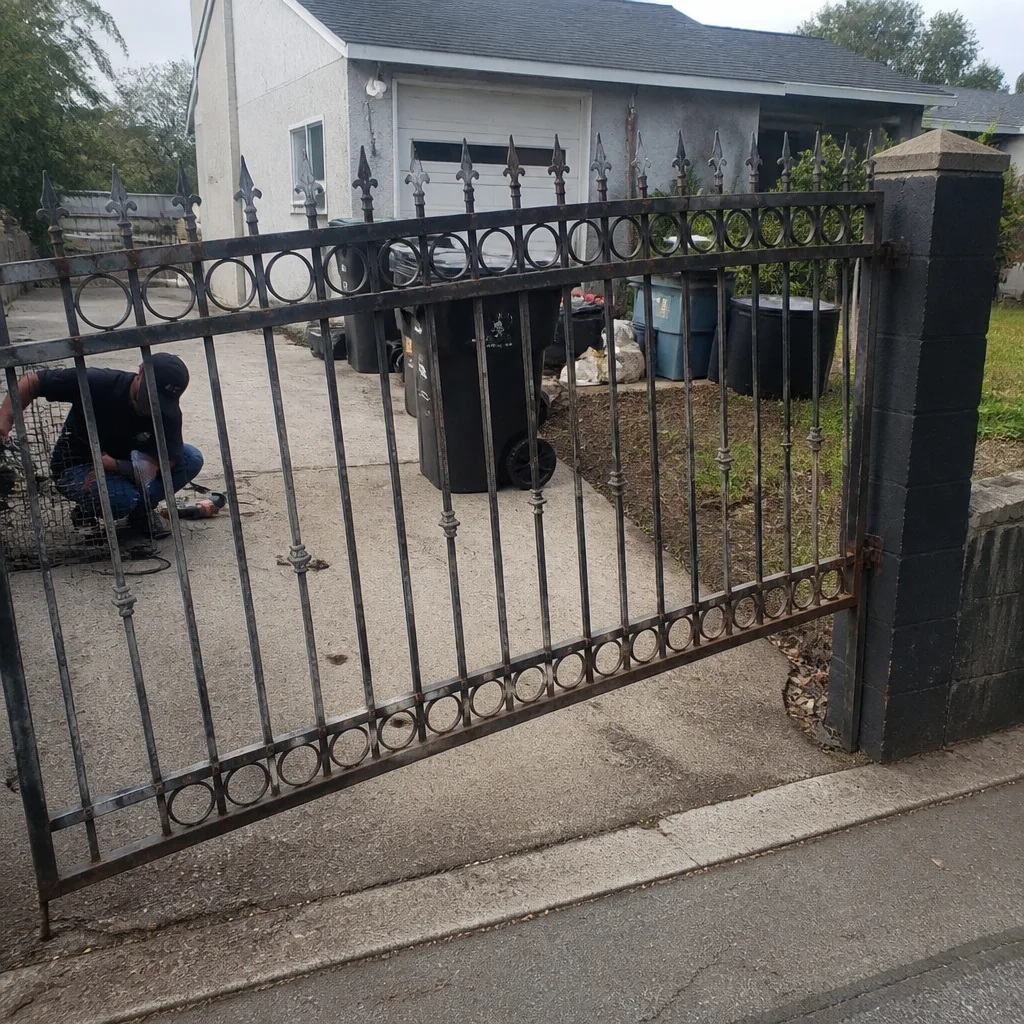 Before
 After
 Before
 After
 Before
 After